Quick Answer
Before developing a three-wheeler guard or cargo rack, buyers should confirm the exact vehicle brand, model, year, sales market and body configuration; define the installation area and intended use; provide mounting-point photos, measurements, drawings or a sample; fit the prototype on the correct vehicle; and approve the final hardware and packing reference before production.
Confirm the Exact Vehicle and Body Configuration
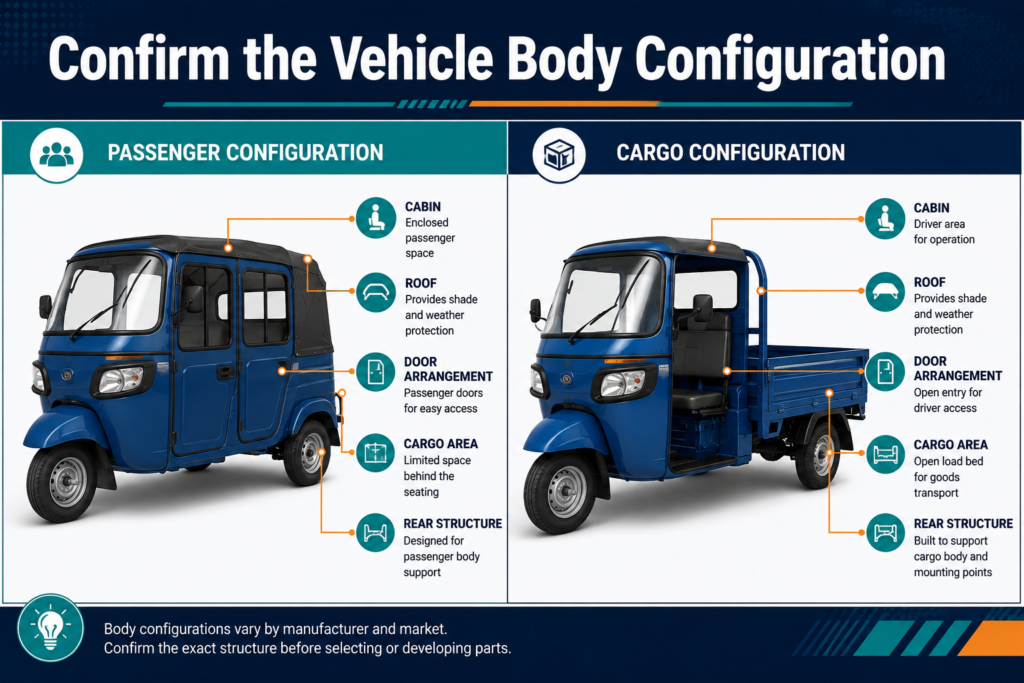
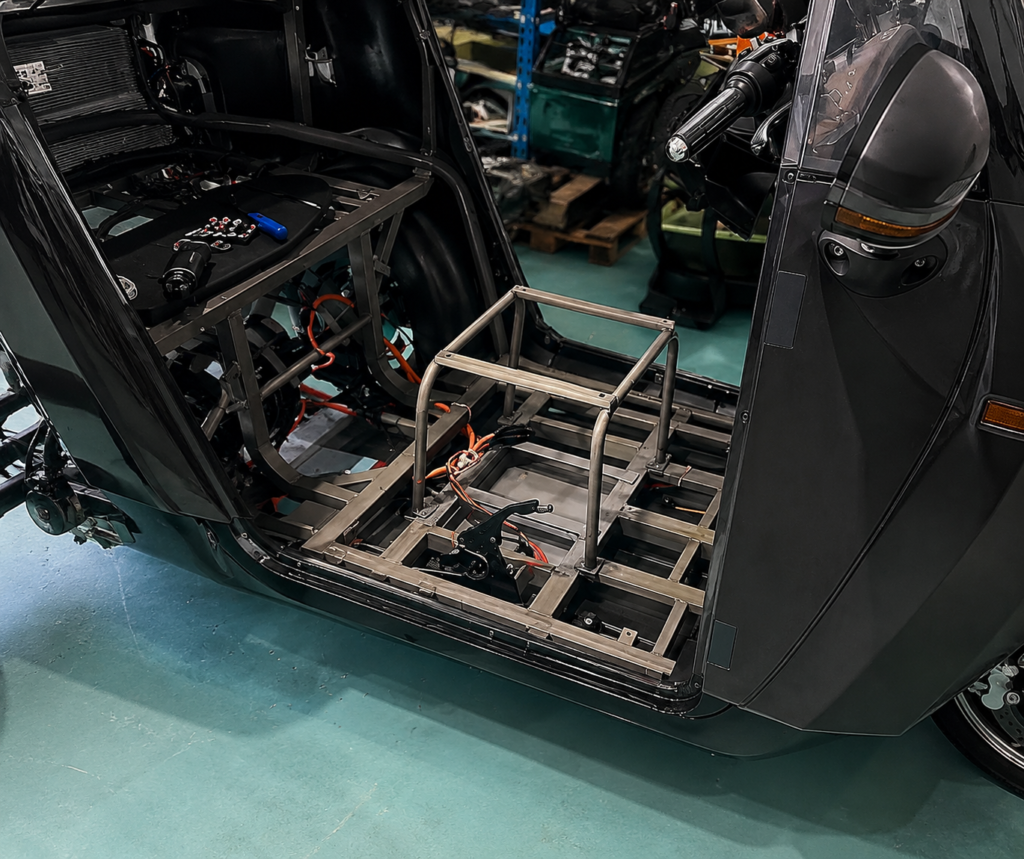
Record the brand, complete model designation, production year and sales market. Then identify the vehicle configuration: passenger or cargo, open or enclosed cabin, roof arrangement, cargo-bed or pickup body, door arrangement and any body or accessory configuration that must remain in place.
Official manufacturer ranges show why these fields matter. TVS, Bajaj and Piaggio all publish passenger and cargo products or variants in their three-wheeler ranges. These pages are terminology references, not compatibility lists for XCMOTOPARTS. Two vehicles sharing a brand or family name should not be assumed to have the same body structure or mounting points.
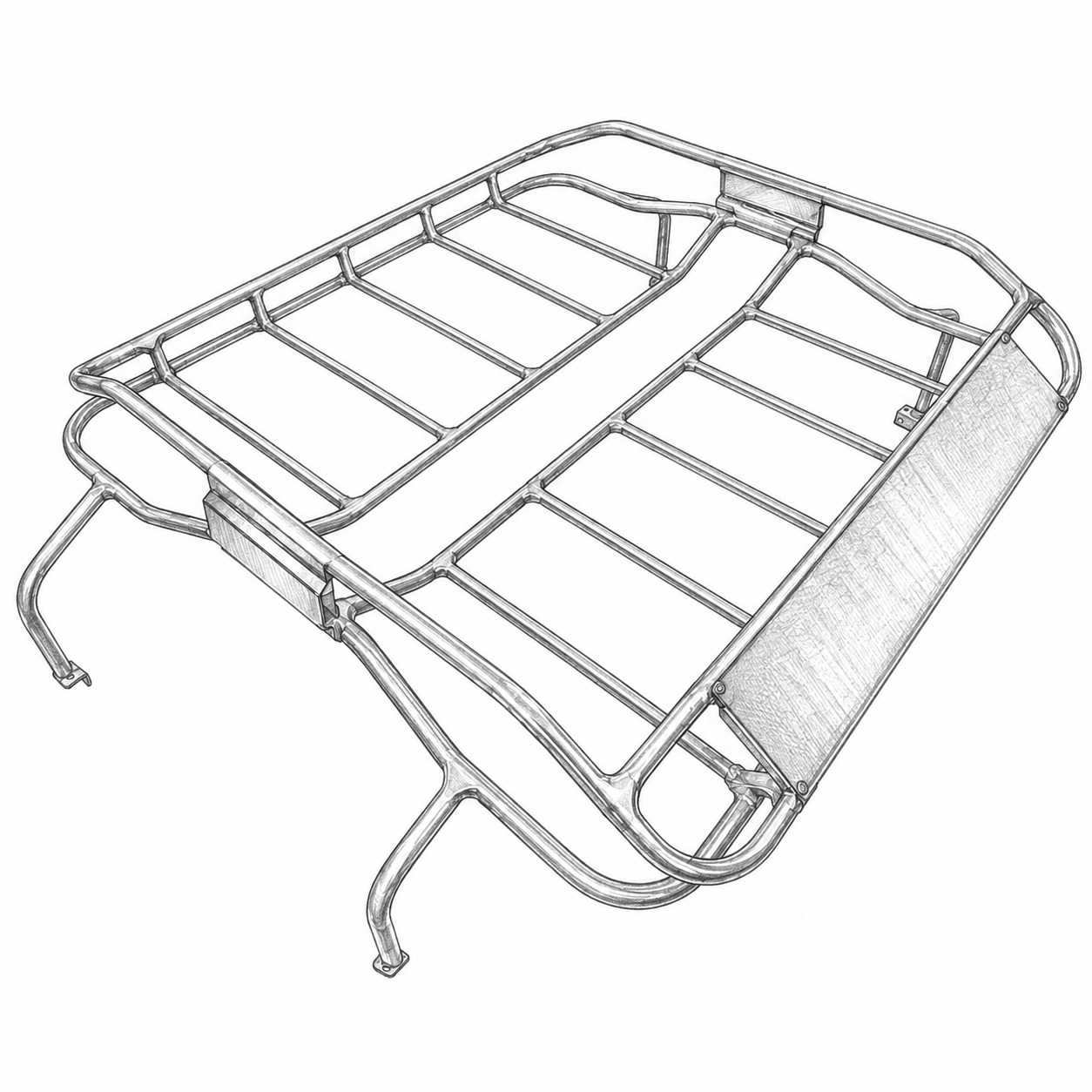
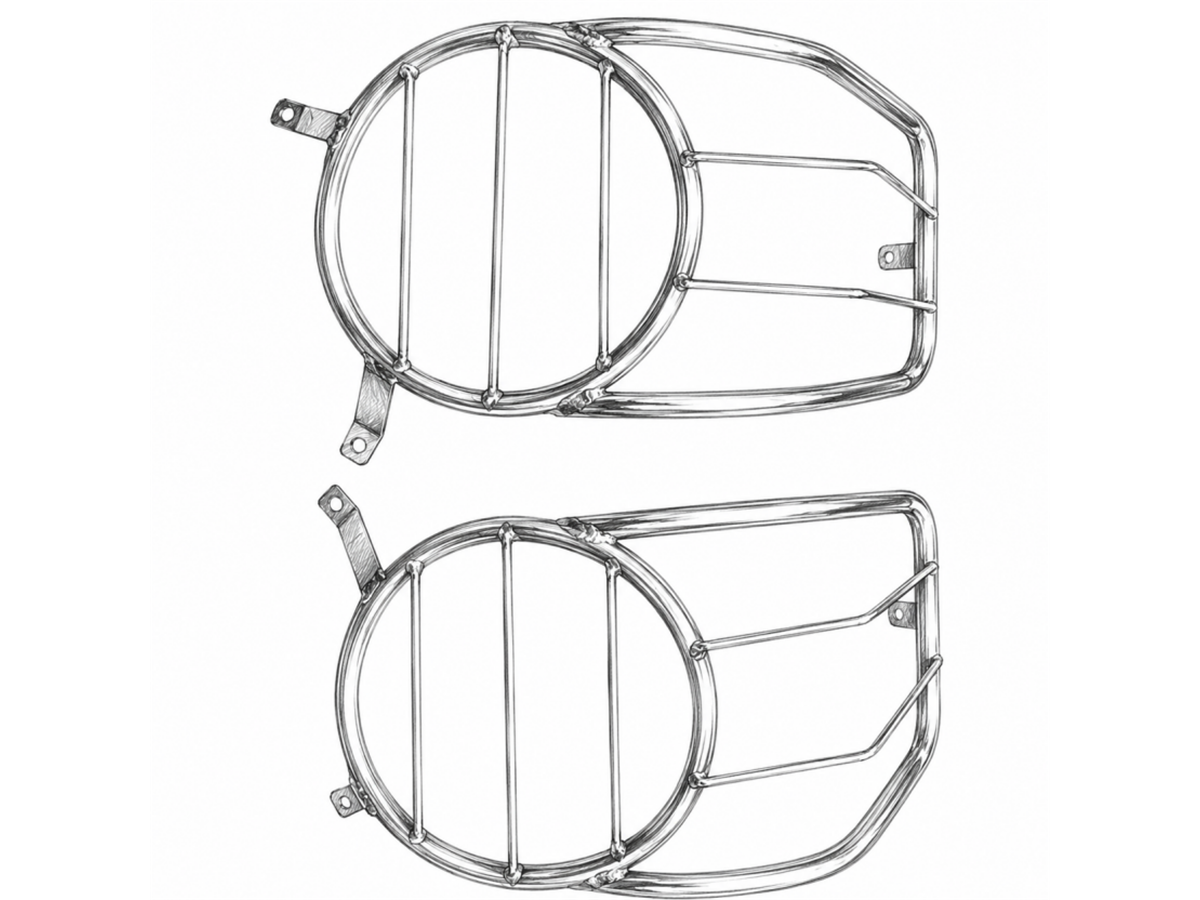
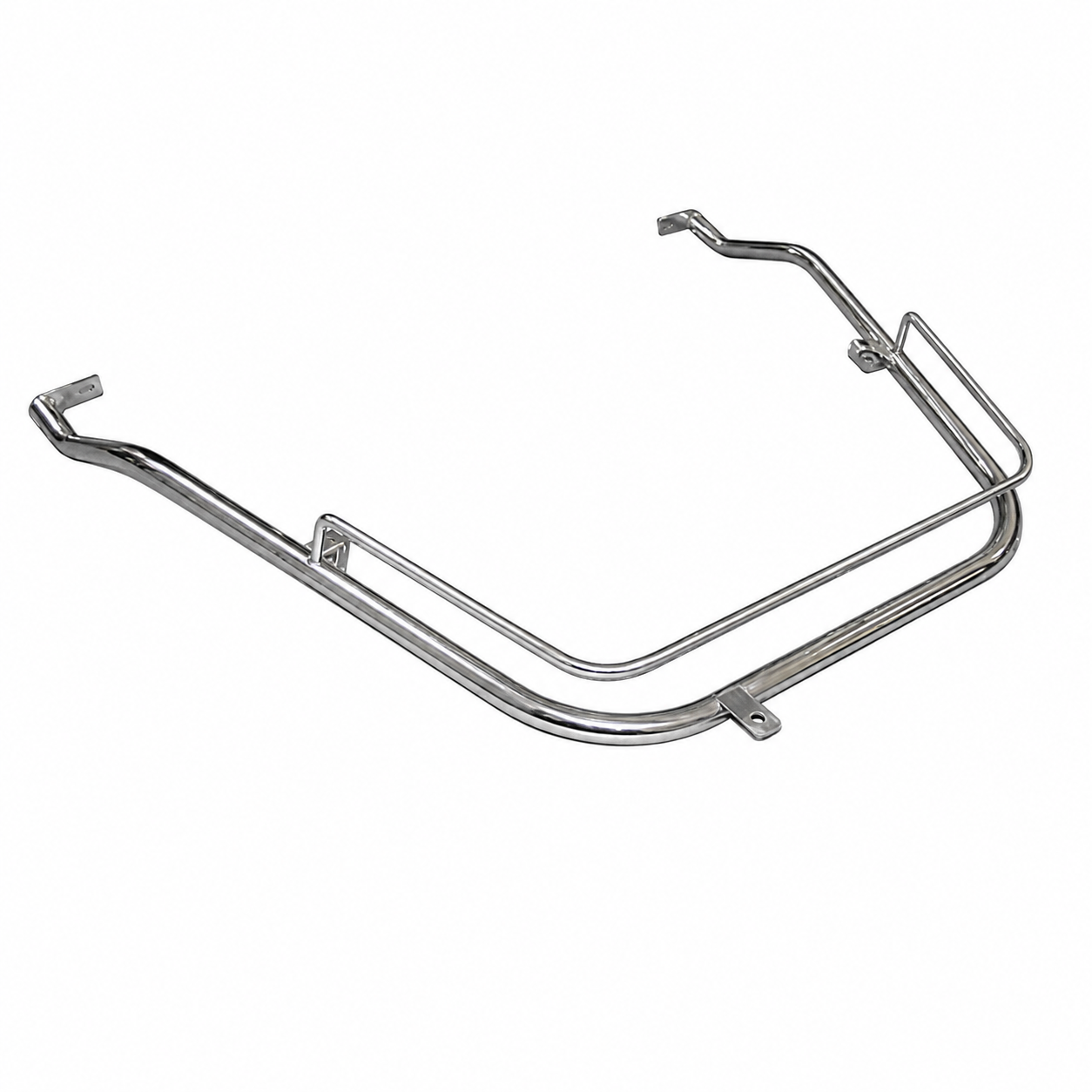
The public XCMOTOPARTS category includes Bajaj RE / RE 4S guards, Bajaj RE / Maxima Z roof carriers, TVS King / TVS King Deluxe guards and Piaggio Apé references. These are enquiry references, not a substitute for confirming year, market and body version.
Define the Product, Installation Area and Intended Use
State what needs to be developed and where it will attach. The request might be a front, rear or side guard, passenger guard frame, cargo rack, roof rack, backrest frame, windshield frame or another tubular metal structure. Mark the location on a duplicate vehicle photo or simple sketch.
Also describe the intended function. For a cargo rack, say whether the requirement is a platform, tubular frame or mounting support. For a roof rack or guard, identify doors, lamps, service areas and surrounding components that must remain usable or clear.
This information defines the development question. It does not establish a load rating, payload, impact-resistance claim or safety performance. Those statements require confirmed engineering requirements and supporting evidence, so they should not be added to an initial enquiry without factory approval.
Photograph the Vehicle and Mounting Areas
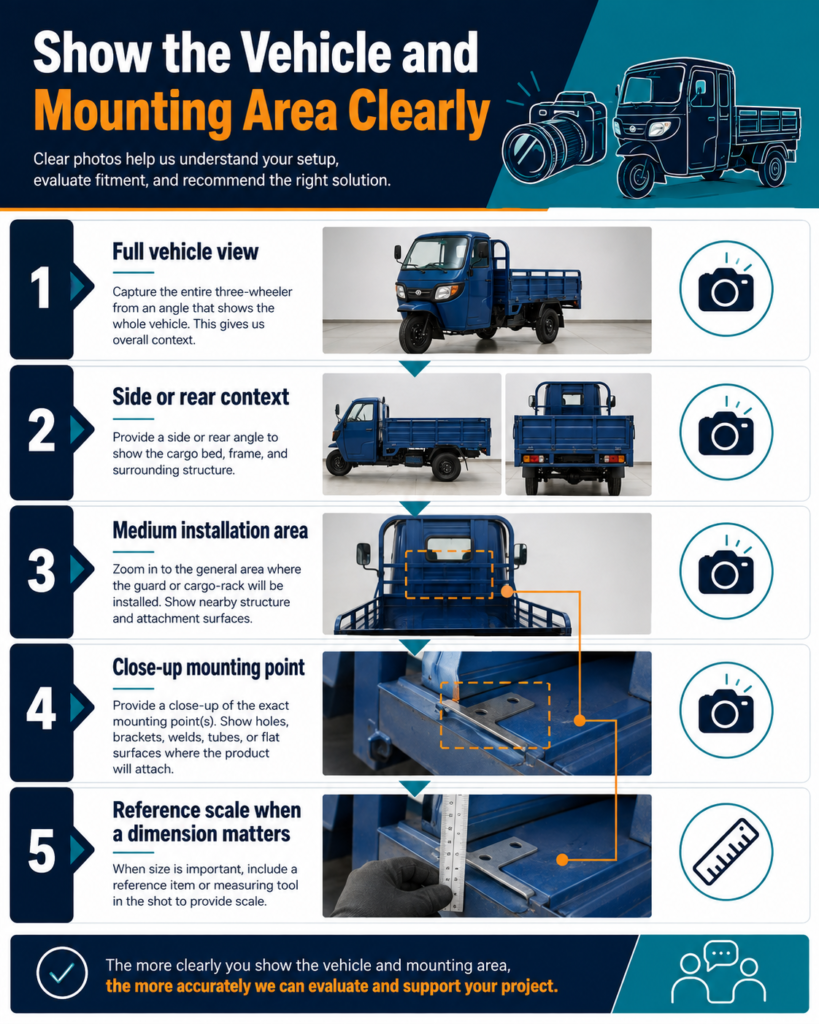
Start with clear front, rear, side and three-quarter views where practical. Keep enough of the vehicle in frame to show the cabin, roof, cargo area, lamps, doors and rear structure. Keep each body version in a separate, clearly identified reference set.
Photograph the proposed installation area at three levels: context, medium distance and close-up. The close-up should show the hole, bracket, frame tube, contact surface or other vehicle-side interface, while the context view locates it on the vehicle.
Include nearby doors, lamps, body panels, cargo-bed edges, roof members, suspension areas and components that move or need service access. A hole without context and a full vehicle without the interface are both incomplete evidence.
Provide Measurements, Drawings or Physical References
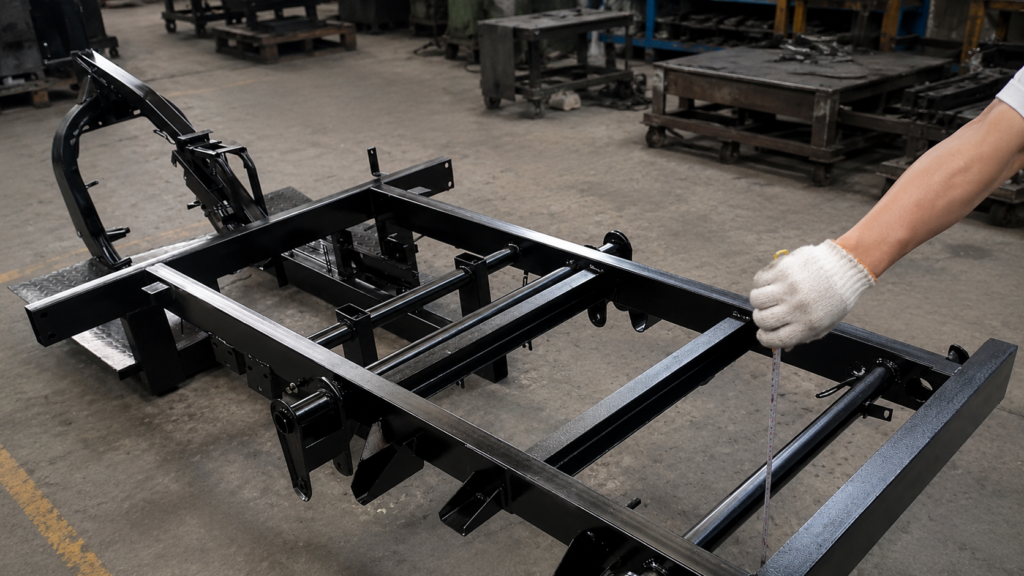
Send whatever reliable reference material is available, and describe its status honestly:
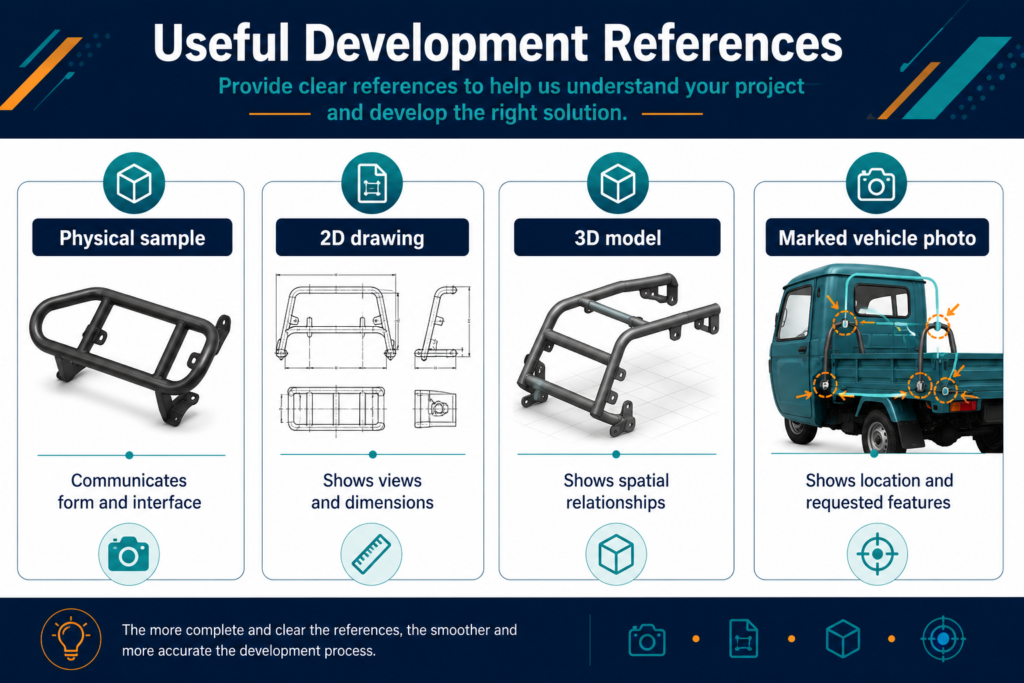
| Available reference | What it can help communicate | What still needs checking |
|---|---|---|
| Physical sample or existing product | Form, interfaces and hardware | Target-vehicle identity and acceptable fitment |
| 2D drawing | Views, dimensions and hole relationships | Current revision and agreement with the vehicle |
| 3D model | Part geometry and spatial relationships | Vehicle-side references, revision and clearance |
| Hand sketch or marked photo | Product idea, location and requested features | Real dimensions and contact surfaces |
| Original bracket | Contact face, holes and interface shape | Position and orientation on the target vehicle |
| Poorly fitting existing product | Record of the reported issue | Unmodified condition and correction objective |
No reference should be treated as automatically correct or wrong. An old drawing may describe a previous version, a copied sample may contain a fitment issue, and a 3D model may describe only the product. Every reference still needs to be checked against the exact target vehicle.
Review the Development Information Before Prototyping
A practical framework is requirement review, vehicle and mounting-point confirmation, drawing or sample review, prototype development, trial installation, revision, final sample approval, production reference confirmation, and hardware and packing confirmation. This is not a fixed delivery promise or universal factory SOP.
The manufacturing information affects that review. Tube cutting establishes starting dimensions; tube bending affects shape and mounting-area relationships; notching and chamfering prepare tube ends for contact; and punching and drilling create holes and mounting details. Fixture positioning helps hold hole position and symmetry while manual or robotic welding follows the confirmed structure. After surface treatment, mounting points, hardware and labels may need another check.
The XCMOTOPARTS manufacturing overview publicly describes these operations with fitment, finish and packing checks. Equipment supports the process; it does not prove fitment without vehicle information, prototype fitting and approval.
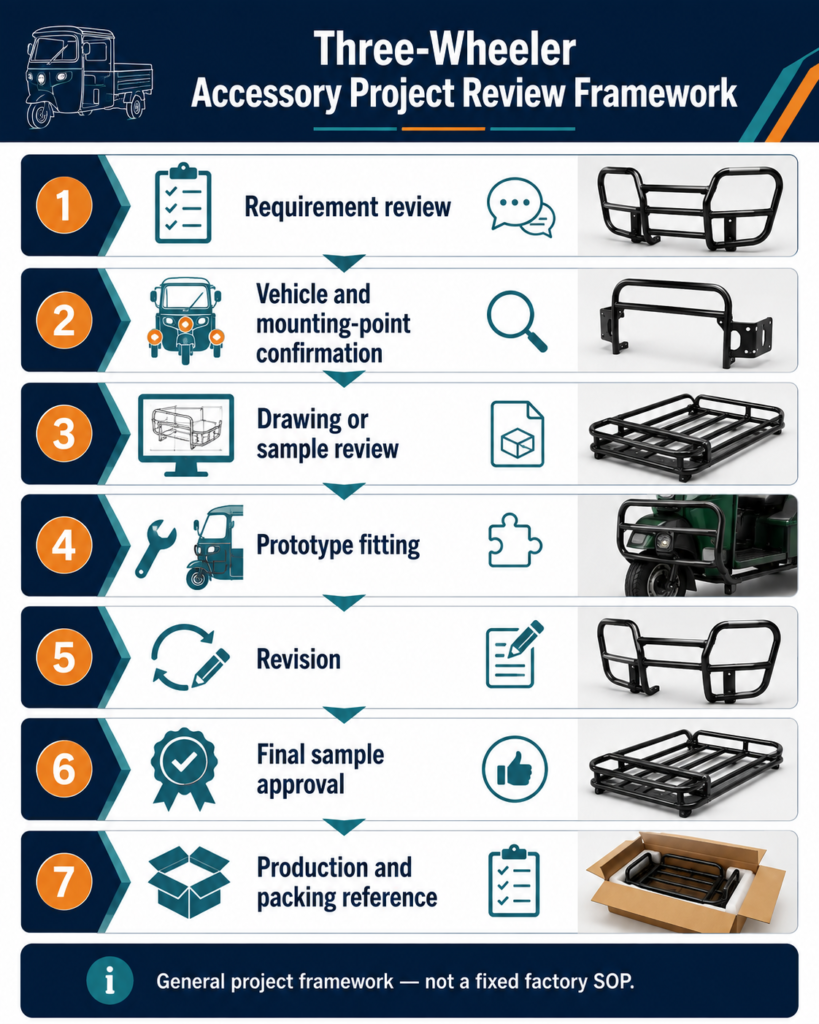
Fit the Prototype on the Correct Vehicle
The first prototype should be fitted, wherever practical, to the identified model and body configuration. Passenger and cargo versions should not be assumed to share one accessory. During the trial, check the mounting points, bracket contact, overall position, nearby doors, lamps, panels, cargo areas, roof structures and access to serviceable parts. Use the intended hardware and record which version of the sample is being fitted.
Installed photographs should show the complete vehicle and important interfaces. If a revision changes a bracket, tube route, hole, hardware item or finish, the next review should use a new or clearly updated sample reference. Approve the revised final sample, not an obsolete one.
Approve the Final Sample, Hardware and Packing Reference
Final approval should connect the sample, drawing or marked reference, hardware list, finish requirement and packing reference. Separate left/right parts, front/rear parts and different vehicle versions. Keep the approved reference with the project records so production and packing do not use an obsolete sample or drawing.
The public XCMOTOPARTS website describes hardware matching, packaging and shipment support, but the exact label format, packaging materials, protection method and inspection frequency still require factory confirmation. Confirm the project-specific contents and identification method rather than assuming every product uses the same packing arrangement.
Three-Wheeler Development Information Checklist
- Exact vehicle brand, model, year and sales market are recorded.
- Passenger or cargo configuration is confirmed.
- Cabin, roof, cargo-bed and body arrangement are shown.
- Product type and installation location are clearly marked.
- Full vehicle and mounting-area photographs are provided.
- Mounting points and nearby components are documented.
- Important reference dimensions are included where needed.
- Available drawings, samples, brackets or marked sketches are identified.
- Prototype fitting will use the correct vehicle configuration.
- The final sample, hardware and packing reference will be approved together.
Frequently Asked Questions
Can a three-wheeler accessory be developed from photos only?
Photos can support an initial review when they show the vehicle, proposed location, mounting points and nearby components. Hidden geometry or missing dimensions may require additional references.
Is the model name enough to confirm three-wheeler accessory fitment?
No. Add the production year, sales market and passenger or cargo body configuration. Body and rear-structure details can affect available space and mounting information.
What should a buyer provide for custom three-wheeler parts development?
Provide vehicle identification, product type, installation location, intended use, full vehicle photographs, mounting close-ups, reference dimensions and available drawings, samples or brackets. Also state finish, packaging and retained-accessory requirements.
Should passenger and cargo versions be treated separately?
Confirm them separately unless vehicle evidence shows that the same design is intended for both. Passenger and cargo versions can have different body, roof, door, lamp and rear structures, so a shared product should not be assumed from the family name alone.
Send Your Project Information to XCMOTOPARTS
To request a three-wheeler guard, cargo rack or other tubular metal accessory review, prepare the exact vehicle brand and model, production year, sales market, passenger or cargo configuration, full vehicle photographs, mounting-area close-ups, reference dimensions and any available drawing or physical sample. Review the XCMOTOPARTS three-wheeler product category and drawings and samples process, then submit the project through the B2B inquiry form. The factory can then identify what is clear, what is missing and what needs to be confirmed before prototype review.