
Quick Answer
Custom tubular motorcycle parts development is easier to review when the buyer provides the exact application, motorcycle model and year where relevant, mounting-point photos, a drawing or physical sample, critical dimensions, expected quantity, finish, hardware and packing requirements.
A product name or reference photo alone is usually not enough for a reliable quotation. The factory must understand the part structure, connection points, production expectations and final delivery requirements before confirming the development route.
Why the Initial Information Matters
A custom tubular part may look simple, but its final result depends on more than the outside shape. Tube diameter, wall thickness, bend position, mounting-hole distance, bracket angle and welding position can all affect installation and appearance.
For motorcycle rear racks, crash bars and other tubular metal parts, the same general product name may refer to different structures for different motorcycle models or market versions. A small difference in the vehicle frame or body panel can change the mounting position and available clearance.
At XCMOTOPARTS, a drawing, a physical sample and vehicle photographs answer different questions during project review. A drawing explains the intended dimensions. A sample shows the physical structure. Vehicle photographs show the actual mounting environment and surrounding parts.
Start with the Product and Vehicle Application
The first step is to define what needs to be developed.
The buyer should provide:
- Product type, such as a rear rack, crash bar, guard or custom tubular metal part
- Motorcycle make, complete model and production year where relevant
- Sales market or market version
- Intended use and loading or protection requirement
- Product position, such as front, rear, left or right
- Existing accessories that must remain installed
- Expected quantity or project stage
For Three Wheeler Spare Parts or other vehicle-specific parts, also provide the body configuration and the intended installation area.
This information helps the factory understand whether the request is a model-specific replacement part, a new product development project or a general tubular structure that still needs further engineering review.
Provide a Drawing, Physical Sample or Clear Reference
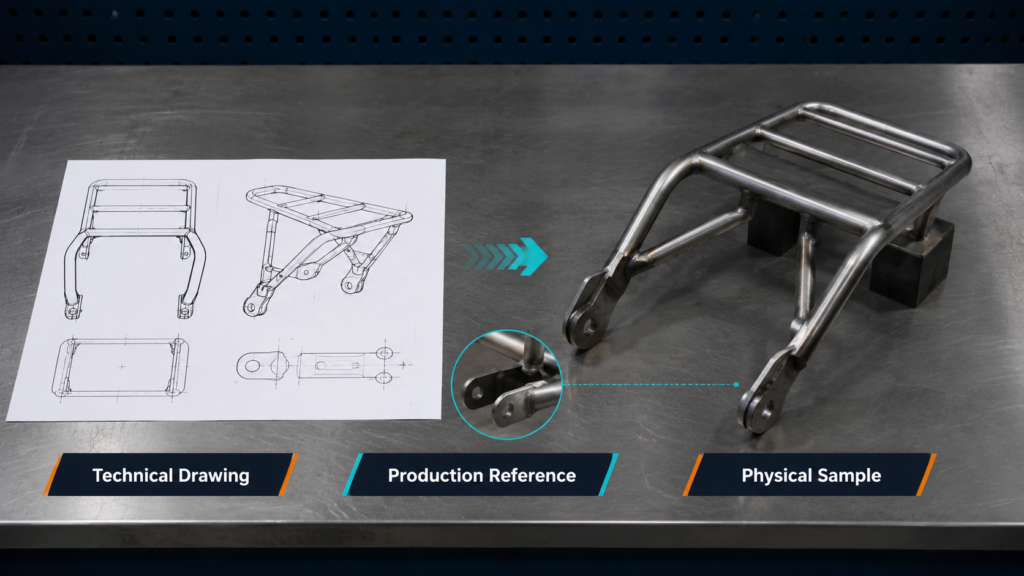
A drawing or sample gives the factory a starting reference.
A useful drawing should show:
- Overall length, width and height
- Tube diameter and wall-thickness requirements where known
- Bend locations and approximate angles
- Mounting-hole positions
- Bracket shape and orientation
- Important clearances
- Left- and right-side differences
- Finish and hardware requirements
If a drawing is not available, the buyer can provide a physical sample, clear product photographs or a marked-up reference image.
A sample may show details that are difficult to communicate in a photograph, including tube joints, bracket thickness, hole orientation and the relationship between different components. However, a physical sample should still be identified clearly. The buyer should state whether it is an approved production reference, a competitor sample, a temporary prototype or only a shape reference.
The drawings and samples section of the XCMOTOPARTS Solution page explains the types of development references buyers can prepare.
Document the Mounting Points
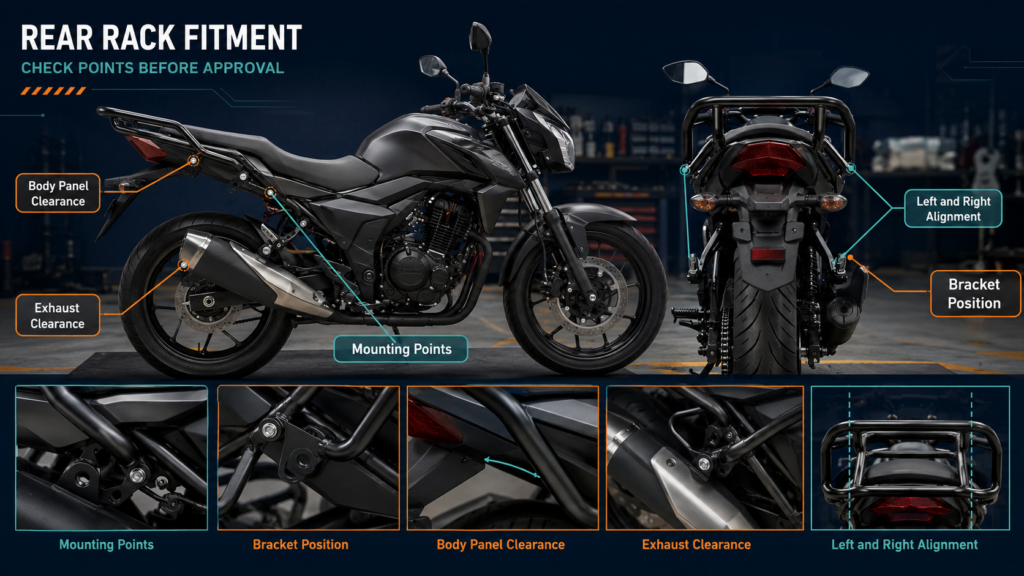
Mounting-point information is especially important for model-specific motorcycle parts.
The buyer should provide:
- Full-vehicle photographs from the side and rear
- Clear photographs of the installation area
- Close-ups of every relevant mounting point
- Existing bolts, brackets and body panels
- Left- and right-side photographs
- A ruler or other visible measurement reference where possible
- Notes about accessories that must remain installed
The photographs should be clear enough to show the holes, contact surfaces, surrounding panels and available clearance. A close-up without vehicle context may not show how the part is expected to connect to the complete motorcycle.
When possible, mark the mounting points on the photographs. This reduces uncertainty about which hole, bracket or frame interface the factory should review.
How the Reference Becomes a Production Part
After the reference is understood, the development route may include several production steps. The exact route depends on the structure, material requirements, quantity and required precision.
Common steps for tubular motorcycle parts may include:
- Tube cutting
- Tube bending
- Tube end preparation, notching or chamfering
- Punching and drilling
- Fixture positioning
- Robotic or manual welding
- Fitment inspection
- Surface treatment
- Hardware preparation
- Label and packing confirmation
Each step can affect the final result.
Cutting controls the starting length of each tube section. Incorrect tube length can change the overall position of a bend or mounting bracket.
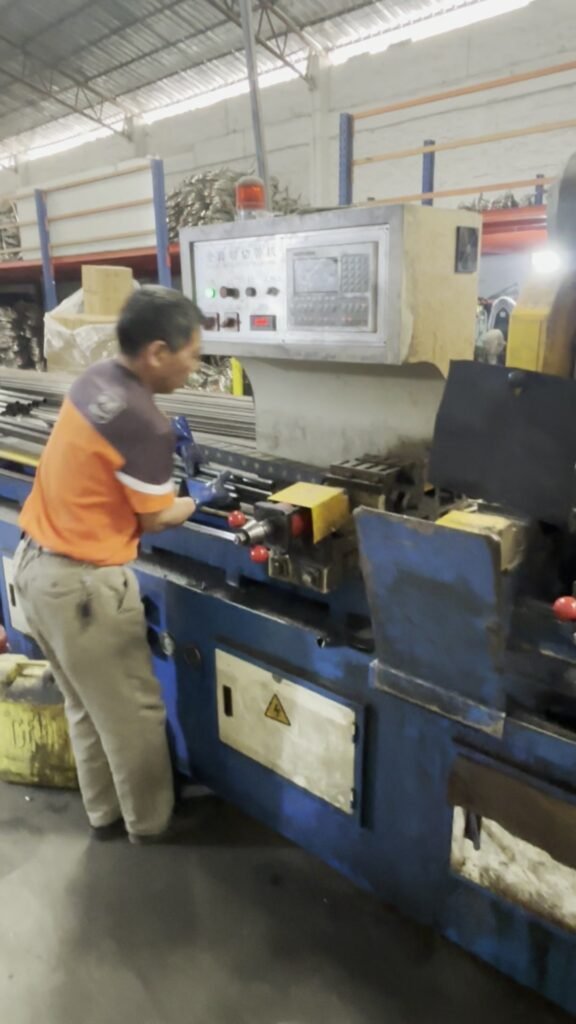
Bending affects the shape, angle and alignment of the tubular structure. If the bend reference is unclear, the finished part may have the correct general appearance but still fail to align with the intended mounting points.
Notching and tube-end preparation affect how tubes meet before welding. Poorly matched joints can change the contact area and influence the final appearance of the weld.
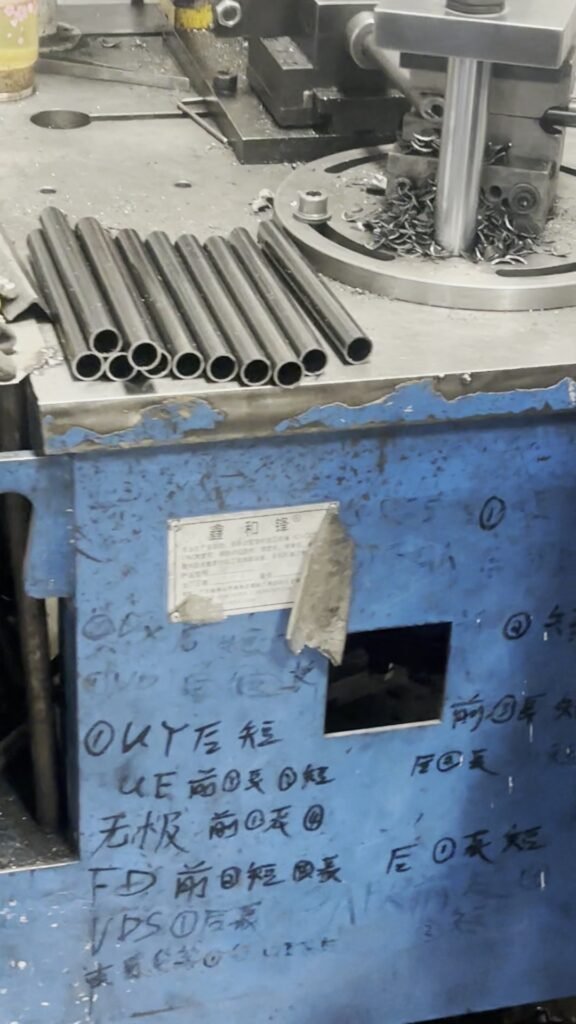
Punching and drilling determine the position and size of mounting holes. A small hole-position difference can create installation difficulty, especially when several brackets must connect at the same time.
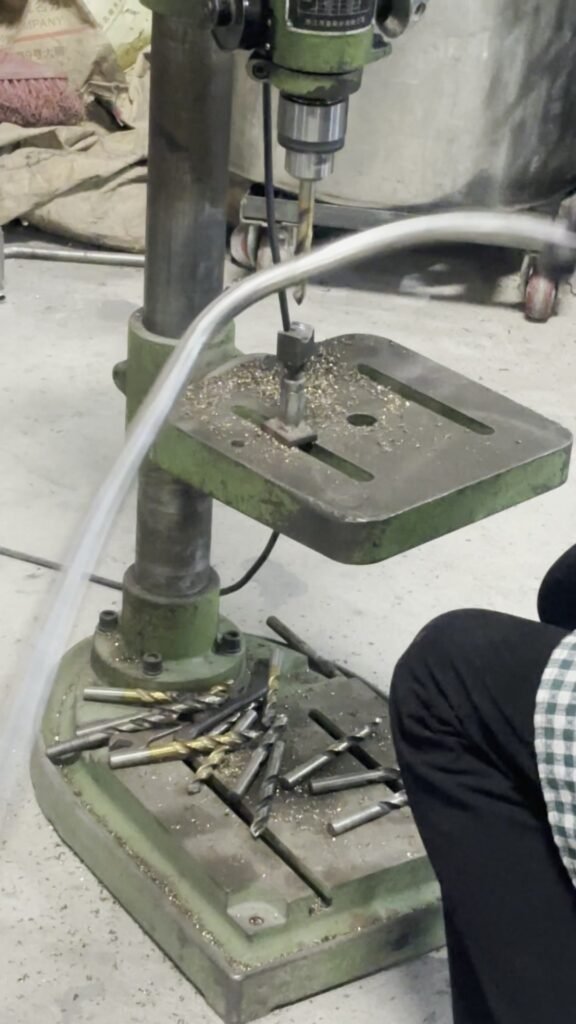
Fixture positioning helps keep components in the intended relationship during assembly. The buyer should identify which surfaces, holes or edges are critical before production begins.
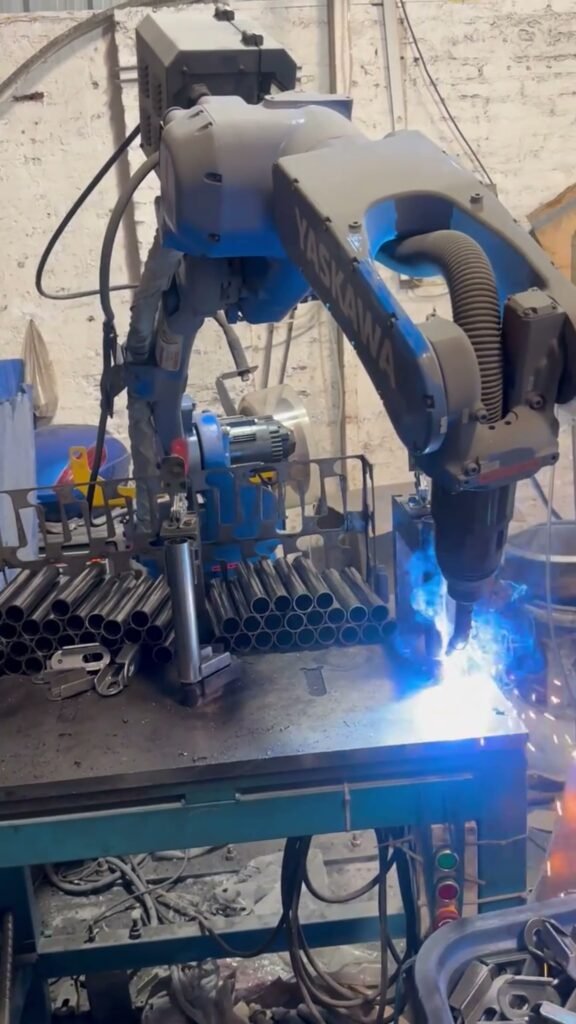
Welding can influence joint appearance, heat distortion and final alignment. The approved reference should therefore include the expected weld position and any appearance requirements that matter to the buyer.
State the Required Precision Clearly
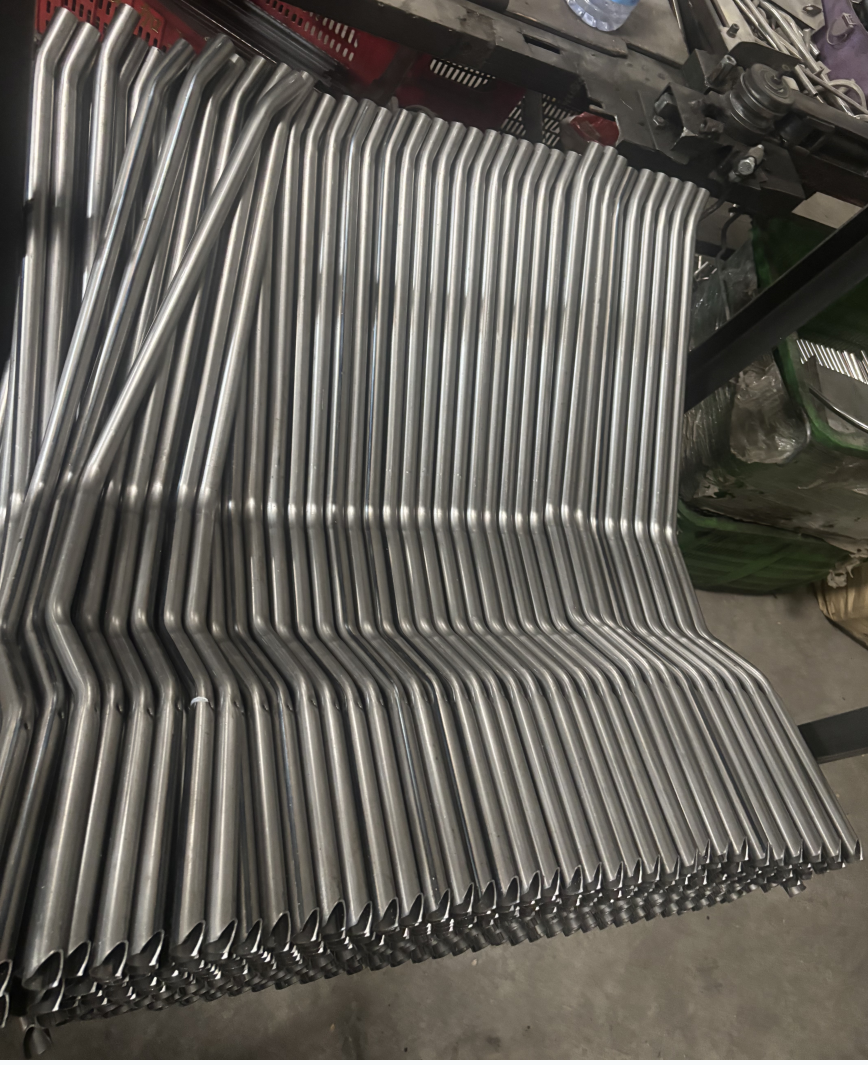
Not every project requires the same level of dimensional control. If a mounting interface, bend angle or hole distance is critical, the buyer should identify it before quotation.
The buyer should explain:
- Which dimensions are critical to installation
- Which surfaces must remain aligned
- Which holes must match the motorcycle
- Whether the part must be checked on a physical vehicle
- Whether a manual or machine-assisted tooling route is acceptable
- Which appearance requirements are essential
A factory cannot judge the required precision only from a product photograph. If the buyer has a tolerance, drawing or inspection method, it should be included with the inquiry.
Confirm the Sample and Revision
Before bulk production, the buyer and factory should agree which sample, drawing or revision is the production reference.
The approval record should identify:
- Product name or buyer part number
- Motorcycle model and year where relevant
- Drawing or sample revision
- Finish and color reference
- Hardware arrangement
- Label and packing reference
- Approved photographs
- Any accepted deviations
If the sample is changed after testing or fitment review, the revision should be recorded. Otherwise, the factory and buyer may refer to different versions during quotation, production or inspection.
For model-specific parts, a sample should be checked on the intended motorcycle whenever possible. Product photographs can show appearance, but they cannot fully confirm mounting alignment, body-panel clearance or interference with existing accessories.
Confirm Material, Finish and Hardware
The buyer should provide the available material information and finish preference as early as possible.
The request may include:
- Material preference
- Tube diameter and wall thickness
- Raw, polished or coated surface
- Powder coating, electrophoresis or painting preference
- Color or finish reference
- Hardware type and quantity
- Bracket and spacer requirements
- Protection requirements during shipment
If the material grade or exact specification is not yet decided, state that clearly. The factory can then identify what still needs to be confirmed instead of treating an assumption as a final requirement.
Hardware should be reviewed as part of the product, not as an afterthought. Bolts, washers, spacers, clamps and brackets should match the approved structure and packing arrangement.
Confirm Quantity, Labels and Packing
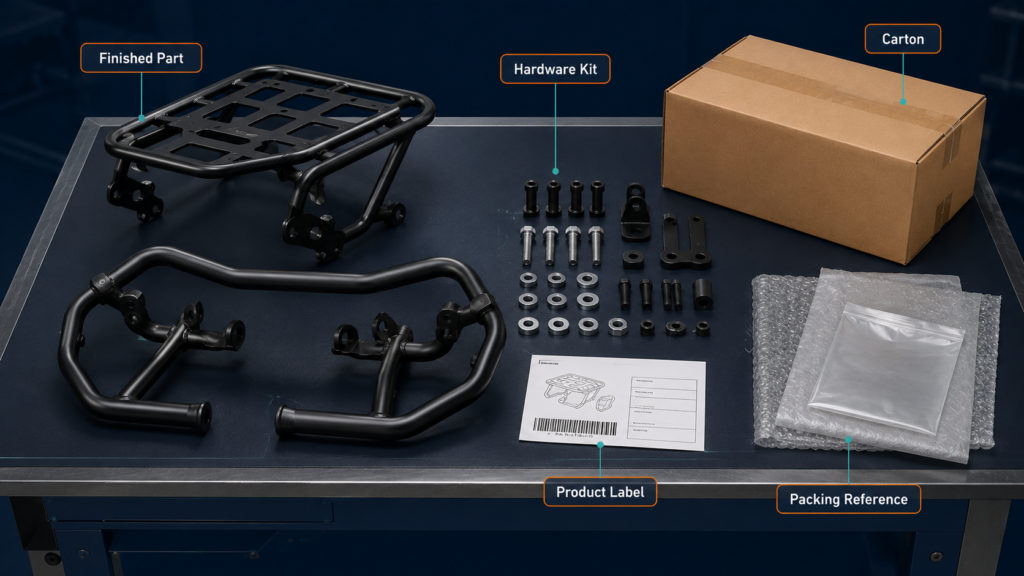
Quantity affects the quotation discussion and production planning. The buyer should provide an estimated quantity and explain whether the project is at the prototype, sample approval or bulk-order stage.
Packing information may include:
- Individual protection requirements
- Hardware-bag identification
- Product labels
- Carton marks
- Quantity per carton
- Private-label artwork
- Handling notes
- Warehouse or buyer reference numbers
The final packing reference should be approved together with the product reference. This is particularly important when several similar racks, guards or brackets are included in one shipment.
A Practical Buyer Checklist
Before sending a custom tubular motorcycle parts inquiry, check that the request includes:
- Exact product type and application
- Motorcycle model, year and market version where relevant
- Full-vehicle and mounting-point photographs
- Drawing, physical sample or marked reference
- Critical dimensions and mounting points
- Material and tube requirements
- Finish and color reference
- Expected quantity and project stage
- Hardware and accessory requirements
- Labels, private-label and packing requirements
- Required precision or inspection expectations
- Contact information for technical clarification
If the request is missing several of these items, the factory may need to ask additional questions before providing a reliable quotation or development recommendation.
Frequently Asked Questions
Can a factory develop a tubular motorcycle part from photographs only?
Photographs can be used for an initial discussion, but they may not provide enough information for model-specific development. A drawing, physical sample, mounting-point information or critical measurements will usually be needed before the structure can be reviewed in detail.
Why are mounting-point photographs important?
Mounting-point photographs show where the part must connect and what body panels, brackets or accessories may affect installation. They help separate a general shape reference from a model-specific fitment requirement.
Does a physical sample replace a technical drawing?
Not always. A physical sample shows the existing structure, but it may not reveal every required dimension, tolerance or design intention. A drawing and sample can be used together when both are available.
What should buyers send for a custom tubular parts quotation?
Send the product application, exact vehicle information where relevant, full-vehicle and mounting-point photographs, drawing or sample, critical dimensions, quantity, material and finish preference, hardware requirements and packing details.
Send Your Custom Tubular Parts Requirement to XCMOTOPARTS
For a custom tubular motorcycle parts project, send the product application, motorcycle model and year where relevant, mounting-point photographs, drawing or sample, critical dimensions, expected quantity, material and finish preference, hardware requirements and packing information.
You can review the XCMOTOPARTS drawings and samples process, review common buyer questions, or submit the project through the B2B quotation form.