Quick Answer
Motorcycle parts welding quality cannot be judged from a smooth-looking weld alone. For a rear rack, crash bar, Three Wheeler guard or other tubular metal part, the buyer should define the exact application, controlling drawing or sample, joint locations, mounting relationships, visible acceptance reference and evidence needed before batch production.
A useful review separates three questions. Was the part positioned against the correct reference? Do the visible welded areas match the agreed requirement? Does the finished assembly still match the approved fitment and dimensions?
Why a Clean-Looking Weld Is Not a Complete Quality Requirement
Weld appearance matters, especially where the joint remains visible after finishing. It can help a buyer identify visible discontinuities, excess spatter, sharp areas or a joint that differs from the approved reference. It cannot prove bracket position, vehicle fitment or hidden conditions.
The scope of visual review must also be understood. ISO 17637:2016 addresses visual testing of fusion-welded joints and may also apply before welding. It is a useful reference for organizing visual inspection, but appearance alone cannot prove performance or suitability for a particular motorcycle.
Buyers should therefore avoid instructions such as “make the weld strong” or “same as the photo.” A reviewable requirement connects the joint to an identified product version, drawing, sample, mounting interface and agreed inspection method.
Three Layers Buyers Should Separate
| Review layer | What the buyer should define | Useful review evidence |
|---|---|---|
| Product and joint reference | Exact application, drawing or sample version, joint locations and installation-sensitive interfaces | Controlled drawing, marked photographs, approved sample or revision record |
| Positioning and production control | Bracket direction, left/right orientation, hole relationships and points that must remain aligned | Fixture explanation, first-off photographs and comparison with the approved reference |
| Inspection and approval | Visible condition to review, fitment checks, dimensions and the person authorized to approve changes | Inspection photographs, fitment record, dimension record and dated approval note where agreed |
These layers are related but not interchangeable. A fixture supports positioning, a visual check records visible condition and a fitment review compares the assembly with its target application.
What to Define Before the First Sample
1.Confirm the Exact Application and Controlling Reference
Start with the product and the application it must serve. For a model-specific part, record the full motorcycle or Three Wheeler reference and the relevant body or market version. Identify the drawing, physical sample, marked photo set or other controlled reference used for development.
Separate preliminary discussion material from the reference that will control sample approval. The custom tubular motorcycle parts development process explains how drawings, samples and application information connect to production decisions.
2.Mark Joint Locations and Installation-Sensitive Interfaces
The buyer should not prescribe a welding process without a technical basis. The buyer should identify which relationships matter, such as mounting holes, bracket direction, contact surfaces, left/right orientation, tube route and clearance.
A marked drawing or photograph can show where a joint sits and which nearby interface must remain controlled. It should not be used to invent a dimension that has not been measured or approved.
3.Agree What Visible Evidence Will Be Reviewed
Before sampling, agree which visible areas will be photographed or reviewed. Record an approved sample or clear visual reference instead of relying on words such as “clean” or “smooth.”
ISO 5817:2023 describes quality levels for imperfections in specified fusion-welded joints. Do not make it a default purchase requirement. Any standard or acceptance method must suit the confirmed project and be agreed by both parties.
4.Connect Welding Review to Finish Preparation
Welding and finish review are separate decisions. State which areas remain visible and which interfaces must remain usable after finishing. Detailed requirements belong in the material and surface finish guide.
What a Welding Fixture Does and Does Not Prove
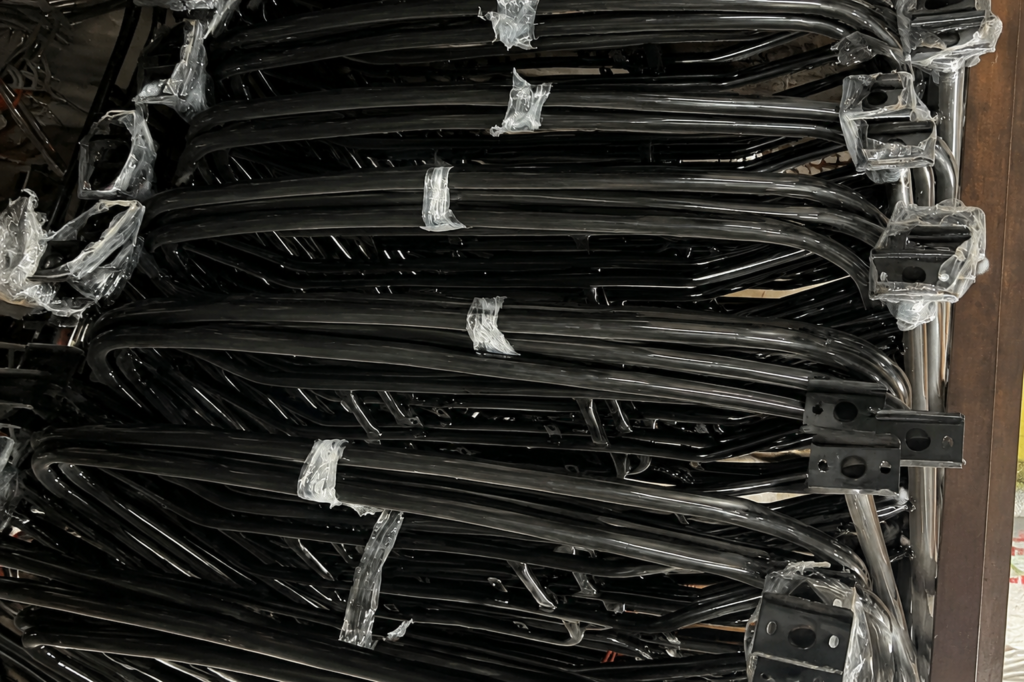
A fixture, jig or positioning tool holds selected features in a defined relationship. It can help control direction, left/right orientation, hole position, bracket angle and connection position.
For relevant XCMOTOPARTS work, fixtures, jigs or related positioning tools support control of these references. The tool still has to match the current product version, and the positioned part still needs the checks agreed for the project.
A fixture does not prove fitment, dimensions, weld performance or batch approval. Buyers should ask which version it supports, how the first piece is checked and what happens when a bracket, hole or tube route changes.
Manual and Robotic Welding: Focus on the Controlled Result
Manual or robotic welding is not a quality certificate. Method selection depends on the confirmed product structure and factory process. Neither method automatically produces an approved part.
Ask which drawing or sample controls the work, how parts are positioned, which interfaces are checked, what evidence is recorded and how revisions are separated.
For a broader view of manufacturing and inspection stages, see the XCMOTOPARTS manufacturing overview and quality-control overview.
Sample Approval Checks for Welded Tubular Parts
1.Review Alignment and Mounting Interfaces
Compare the finished sample with the exact application and approved reference. During XCMOTOPARTS sample review, the part is checked on the corresponding motorcycle or Three Wheeler for mounting holes, bracket angle, left/right parts, clearance and forced alignment.
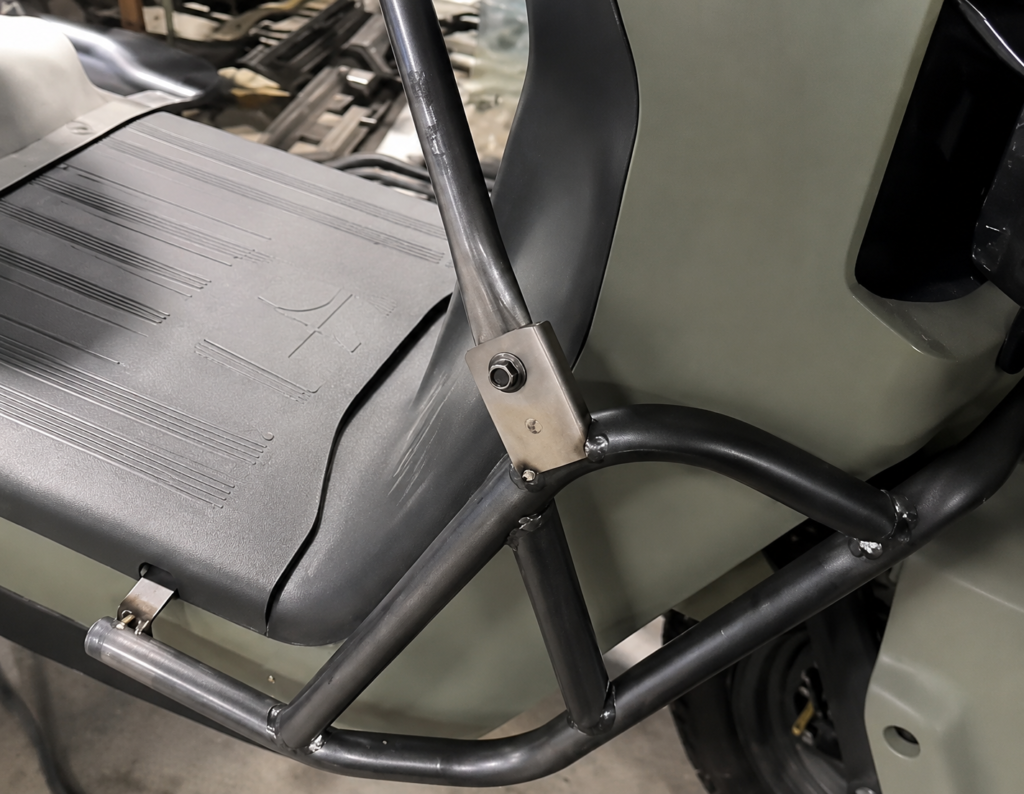
This review does not replace project-specific engineering or performance requirements. It checks whether the sample matches the identified mounting and clearance conditions.
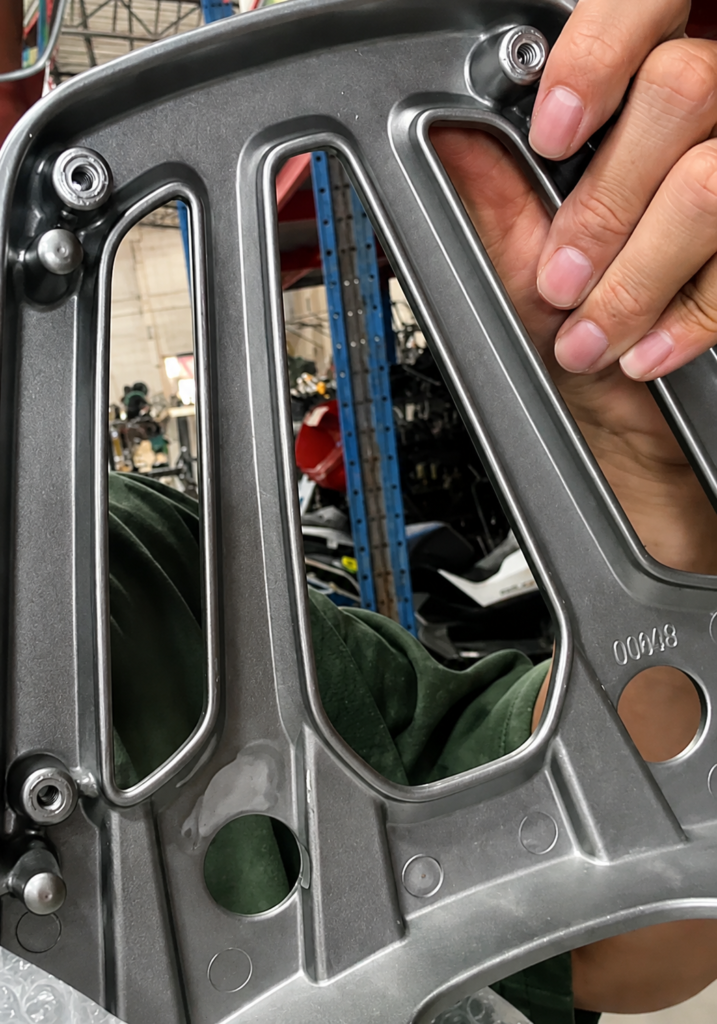
2.Record Visible Weld Condition
Use clear photographs and direct observation to compare joint location, visible continuity and surrounding areas with the agreed reference. Record the sample identity and whether the view was taken before or after finishing.
3.Keep the Limits of Visual Inspection Clear
Do not approve a performance claim from appearance alone. Define any required test, welding procedure, qualification, inspection method or acceptance standard separately and request the corresponding evidence.
The final shipment also needs checks beyond welding. Use the pre-shipment motorcycle parts inspection checklist for dimensions, fitment, finish, hardware, labels and packing.
4.From Approved Sample to Batch Reference
Sample approval should identify the reviewed version. If feedback changes a bracket, hole position, tube route or joint location, the update should not remain only in a message thread.
XCMOTOPARTS records requested corrections and links them to an updated drawing, sample or version. After confirmation, the accepted version becomes the reference for batch production.
This keeps an approved weld appearance from being attached to an outdated structure. Broader controls are covered in the guide to batch consistency and revision control.
Buyer Decision Path: Approve, Clarify, Rework or Hold
- Approve the welding review: the product version, joint reference, positioning relationship, visible condition and agreed evidence are clear.
- Clarify: the sample looks acceptable, but the controlling drawing, fixture version, joint location or inspection record is unclear.
- Rework and review again: the visible condition or interface does not match the agreed reference, and the supplier has identified a correction path.
- Hold production: the product version cannot be identified, fitment requires forced alignment, a required test remains unresolved or the buyer and supplier are reviewing different references.
This decision applies to the agreed welding and sample review. It should not be presented as approval of every performance, regulatory or shipment requirement.
Questions to Ask Before Batch Production
- Which drawing, sample or revision controls the welded assembly?
- Which mounting points, bracket directions or tube relationships are sensitive to positioning?
- Is a fixture used, and which product version does it support?
- What visible weld condition will be reviewed before finishing?
- How will the first finished assembly be checked against the target application?
- What evidence will be recorded, and who can approve a change?
- Does the project require any specific test, procedure, qualification or standard beyond visual review?
Frequently Asked Questions
Can weld appearance alone confirm motorcycle parts welding quality?
No. Appearance can support a visible-condition review, but it cannot by itself confirm internal condition, performance, fitment, dimensions or suitability for a specific application.
What information should buyers define before welding starts?
Define the exact application, controlling drawing or sample, joint locations, mounting relationships, visible acceptance reference, required fitment or dimension checks and any project-specific test or standard.
Why are fixtures used when welding tubular motorcycle parts?
Fixtures can help hold tubes, brackets and interfaces in selected relationships during relevant work. They support positioning, but they do not replace first-off comparison, fitment review or other agreed inspection.
What welding evidence can a B2B buyer request before batch production?
Depending on the agreed project scope, useful evidence may include sample photographs, fixture or positioning photographs, visible weld photographs, fitment evidence, selected dimension records and a dated revision or approval record. Confirm what is needed before production.
Prepare a Reviewable Welding Requirement
A useful welding discussion starts with the product version and its critical interfaces, not a general request for a strong or attractive weld. Connect the drawing or sample to the fixture reference, visible review, fitment check and approval record.
For a tubular motorcycle parts project, review the drawing and sample development process and custom tubular metal parts. Then use the XCMOTOPARTS contact and quote path to send the application, drawing or sample, marked interfaces and project requirements for review.