Motorcycle parts tube bending should be reviewed as a controlled part of the product-development process, not only as a visual manufacturing step. For crash bars, rear racks and other tubular assemblies, a bend can influence the direction of a tube, its relationship with brackets and mounting points, and the way the completed assembly fits the intended vehicle.
A useful buyer review therefore connects the drawing, the bent component, the fixture, the welded assembly and the final fitment result. The objective is not to apply one universal tolerance to every product. It is to agree on project-specific references and evidence before batch production begins.
Quick Answer
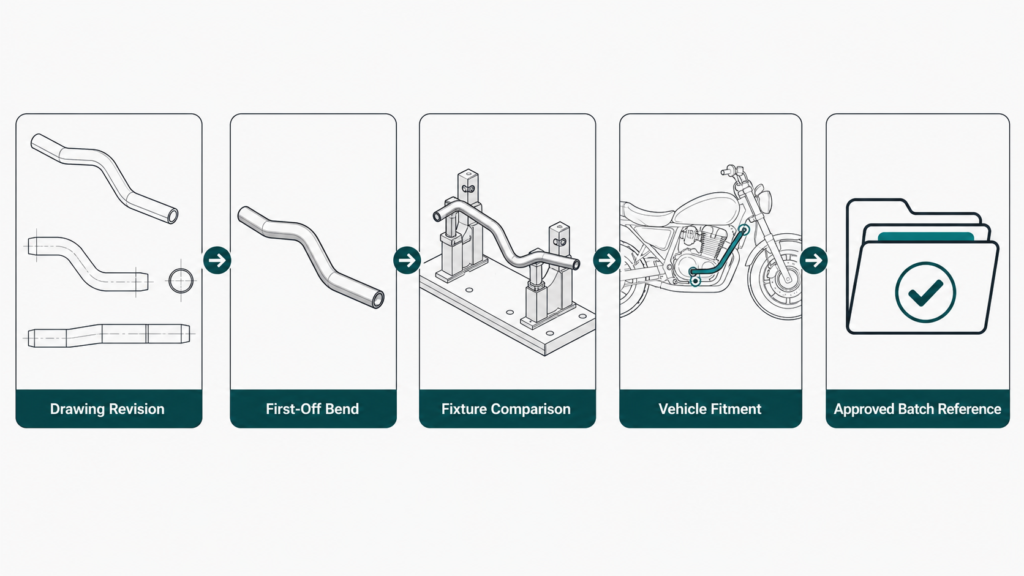
B2B buyers should define the correct product revision, bend geometry, tube orientation and connection relationships before approving a bent component. A first-off sample should then be reviewed for visible bend condition, interface position and its effect on downstream welding and vehicle fitment.
The approval record should identify exactly which drawing, sample or reference represents the accepted version. If the tube material, dimensions, bend geometry or product revision changes, the affected requirements should be reviewed again rather than assumed to remain valid.
Why Tube Bending Needs Its Own Review
A bent tube may look acceptable when viewed separately but still create problems after brackets, plates or other tubes are added. The practical question is not simply whether the machine produced a curve. Buyers need to know whether the bent part supports the geometry and interfaces required by the finished product.
This is particularly important for model-specific components. A crash bar may have several bends leading toward different mounting areas. A rear rack may depend on matching left and right structures. A tubular guard may combine bends with welded plates or brackets whose positions affect installation.
For that reason, tube bending should be reviewed alongside the broader custom tubular motorcycle parts development process, while retaining a clear approval step for the bent component itself.
Start With the Correct Product Reference
A reliable review begins with an identifiable reference. Depending on the project, this may include a drawing, an approved sample, measurement notes or a combination of these items.
The buyer and supplier should be able to answer:
- Which product and revision does the bent tube belong to?
- Which side or orientation does the part represent?
- Which ends, brackets or connection points must relate to each other?
- Which dimensions or reference points are important for the completed assembly?
- What visible bend conditions require review?
- Which evidence will be used to approve the first-off part?
A drawing should not be treated as an isolated document. It needs to correspond to the physical sample and the revision that will be used for production. The XCMOTOPARTS drawings and samples workflow provides context for how these references support product development.
When multiple bent tubes belong to one assembly, label them clearly. Left and right parts, mirrored components and similar-looking revisions can otherwise be confused during sample review.
Review the First-Off Bent Component
The first-off review should happen before a buyer assumes that an attractive individual part will produce an acceptable finished assembly.
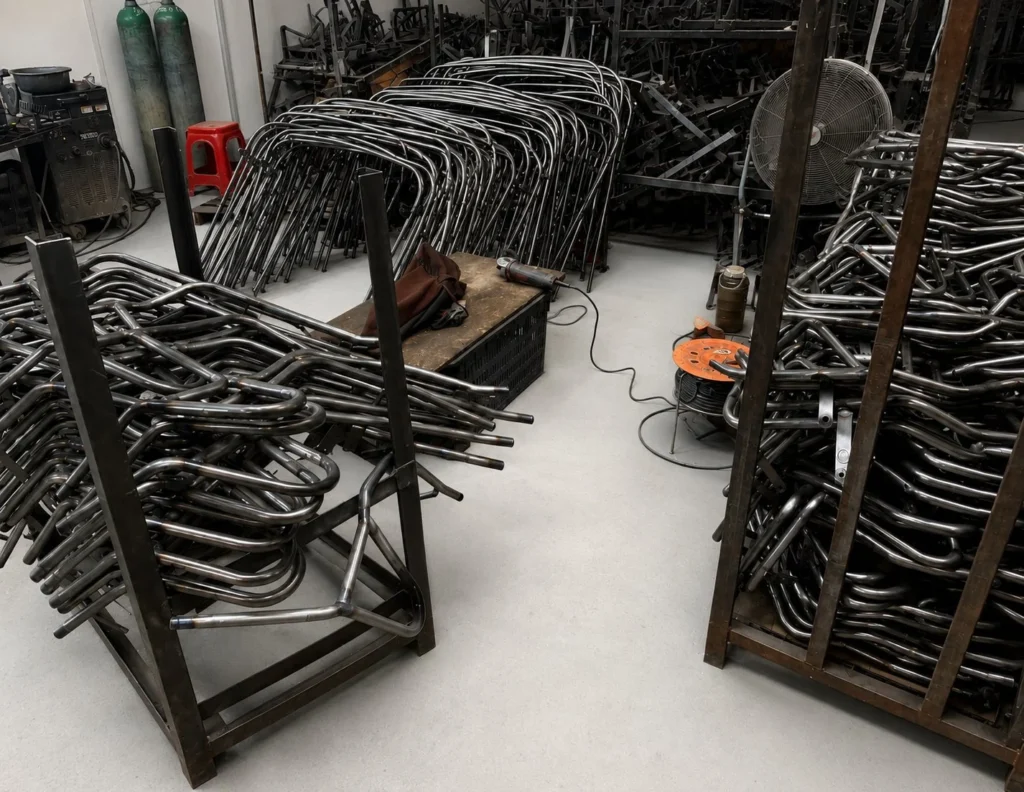
Begin by confirming the basic identity and orientation of the component. Then compare the part with the agreed references. Review the direction of each bend, the relationship between the ends and any areas that will later connect with brackets, plates or other tubes.
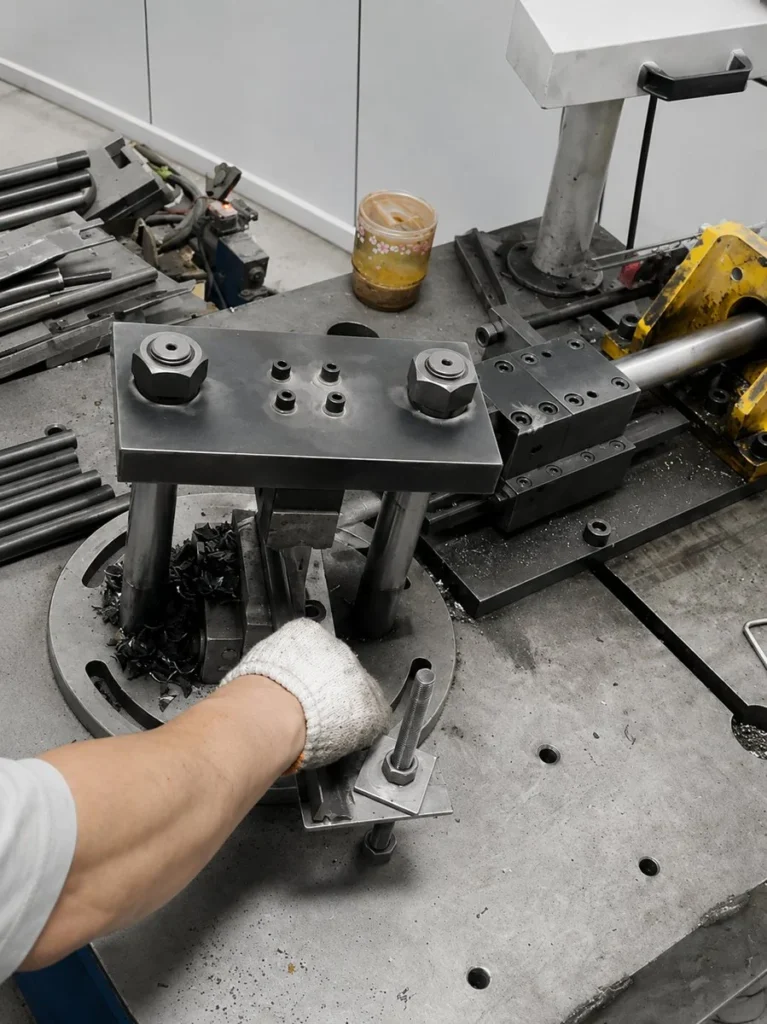
In relevant XCMOTOPARTS projects, fixtures, jigs and positioning tools are used to control direction and key connection relationships, including left/right position, hole position, bracket angle and connection points. These tools do not replace the approved drawing or sample. They help translate the agreed reference into a repeatable positioning method for the related manufacturing steps.
Photographs can support the review, but they should show recognizable reference points. A close-up that hides the full orientation of a tube may be useful for surface inspection while being insufficient for geometry approval. Buyers can request both an overall view and selected detail views.
Check Visible Bend Condition
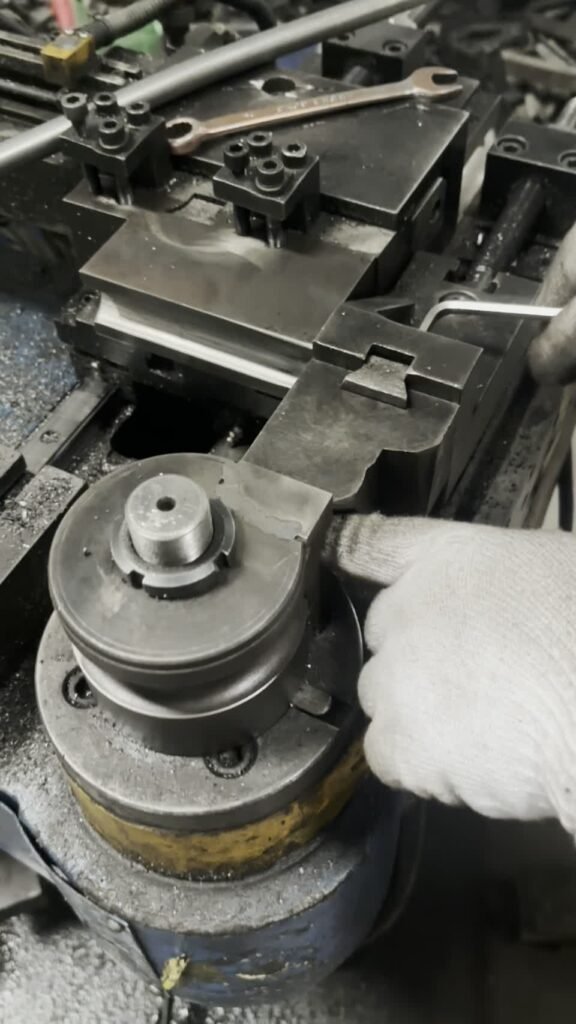
Visible condition should be evaluated against the needs of the specific part and its approved finish. Items commonly reviewed include flattening, wrinkles, creases, cracks and tool marks. The acceptance limit for each condition should be agreed for the project rather than copied from an unrelated product.
A cosmetic surface expectation may also depend on where the bend appears in the finished assembly. A highly visible outer section and a concealed mounting section may require different attention. Any such distinction should be documented so that approval does not depend on an informal interpretation.
The review should also separate issues caused during bending from those introduced during later welding, handling or finishing. Buyers can refer to the separate guide on motorcycle parts welding quality when assessing the completed assembly.
Connect Bending Approval to Fixture and Fitment Checks
Tube geometry becomes commercially important when it affects assembly and installation. A bend that shifts an interface can change how another component enters a fixture, how a bracket meets a mounting area or whether the finished part requires forced alignment.
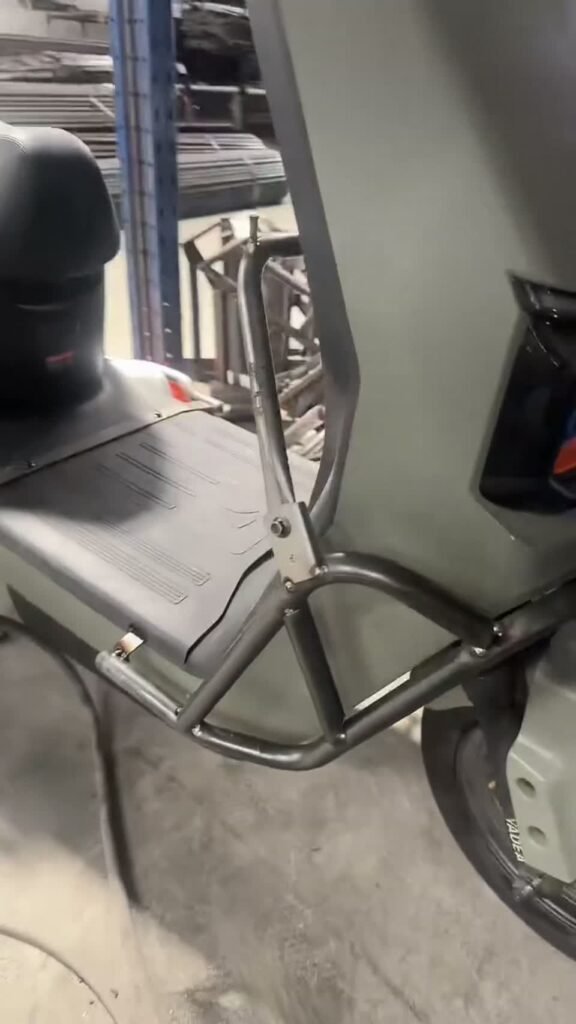
For XCMOTOPARTS sample reviews, the completed sample is checked on the corresponding motorcycle or Three Wheeler where applicable. The review covers hole position, bracket angles, left/right relationships, clearance and whether installation requires forced alignment.
This vehicle-level check is important because no single isolated measurement explains every interaction in a multi-part assembly. It also helps distinguish between a bent-tube issue, a bracket-position issue and a mismatch elsewhere in the product reference.
Fitment approval should therefore identify the applicable vehicle or agreed reference used for the check. A result from one model or revision should not automatically be extended to another.
Use the Approved Version as the Batch Reference
Sample approval is most useful when it creates a controlled reference for subsequent production.
In XCMOTOPARTS projects, review feedback can lead to updates to the drawing, sample or version record. The final approved version then becomes the reference for batch production. This avoids a situation in which production follows an earlier sample while the buyer expects a later revision.
The approved record should make clear:
- The final drawing or sample revision.
- The date and identity of the approved reference.
- Any accepted visible conditions.
- The photos or fitment evidence associated with approval.
- Any changes that require renewed review.
This approach also supports the broader controls described in the guide to motorcycle parts batch consistency.
Evidence Buyers Can Request
A practical evidence package does not need to be complicated, but it should be specific enough to prevent ambiguity. Depending on the project, buyers may request:
- The current drawing or reference with a visible revision identifier.
- Overall photos showing the bent component’s orientation.
- Detail photos of selected bend areas and interfaces.
- A first-off comparison against relevant fixtures or positioning references.
- Photos of the completed assembly before finishing.
- Fitment evidence on the corresponding vehicle or agreed checking reference.
- A record of buyer comments, revisions and final approval.
The required evidence should be agreed before sampling. Requesting new documentation only after production has started can create uncertainty about which version was actually approved.
Buyers preparing an RFQ for custom tubular metal parts can include these evidence requirements with their initial product information.
Frequently Asked Questions
Does every motorcycle part need the same tube-bending tolerance?
No. The relevant requirements depend on the product geometry, mounting relationships, visible areas and agreed inspection method. Buyers and suppliers should define project-specific acceptance references instead of applying an unsupported universal value.
Is a photo enough to approve a bent tube?
A photo can support approval, but it may not show scale, orientation or interface relationships adequately. For model-specific assemblies, photos are more useful when combined with a drawing, approved sample, fixture comparison or fitment check.
Should the bent tube be approved before welding?
Reviewing the first-off bent component before downstream assembly can help identify geometry or visible-condition issues earlier. The completed welded assembly should still be checked because brackets, plates and other tubes create additional relationships.
What should trigger a new review?
A new product revision or a change affecting the tube, bend geometry, orientation or connected interfaces may require renewed review. The exact trigger should be defined in the project record rather than assumed.
How can buyers reduce confusion between sample and batch production?
Identify the final approved drawing, sample and revision clearly. Keep the approval evidence connected to that version, and confirm that the same reference is used when preparing batch production.
Prepare a Clear Tube-Bending Inquiry
A useful inquiry should include the product application, available drawings or samples, model and market information, required interfaces, expected finish, quantity context and the evidence needed for sample approval.
To discuss a motorcycle crash bar, rear rack or another tubular assembly, send the available product information through the XCMOTOPARTS quotation form. The team can then review which additional references are needed before sampling.