
MOQ and lead time are often discussed as if they were fixed properties of a motorcycle part. In practice, both depend on what the buyer is asking the supplier to prepare, approve and repeat. A standard reference, a modified part and a new multi-model project require different planning conversations.
Quick answer: Separate MOQ from production lead time, then map the product reference, model mix, tooling, sample approval, finish, hardware, packaging and order readiness before asking for a firm commercial commitment. If one of those inputs is still open, record it as an assumption instead of treating the schedule as final.
This guide is for importers, distributors and private-label teams planning custom motorcycle-parts orders. It explains the questions to connect before a quotation or purchase order is released. It does not provide a universal MOQ or guaranteed delivery date.
Separate MOQ From Production Lead Time
MOQ answers a quantity question: what is the smallest practical order for the defined scope? Lead time answers a sequence question: which preparation and production stages must be completed before the defined quantity can be released? They influence each other, but they are not interchangeable.
A small order may still need a drawing review, a new fixture, a sample and a finish approval. A larger repeat order may be easier to plan when the reference, tooling and packing instructions are already controlled. Ask the supplier to state which part of the discussion is a quantity assumption and which part is a schedule assumption.
For the earlier information-gathering stage, use the motorcycle parts quote checklist. This article begins one step later: it helps the buyer understand how the agreed inputs affect planning.
Product Structure and Setup Work
Classify the project first:
- Existing reference: the supplier and buyer are working from an approved part, drawing or sample.
- Modified reference: an existing structure changes for a model, mounting point, finish, hardware set or packing requirement.
- New custom development: the geometry, reference, fixture or approval path still has to be established.
This changes the planning questions. Identify the controlling reference, model or variant, expected quantity, finish and kit contents. If a revision is still moving, the supplier may need to re-evaluate the quantity assumption and sequence before confirming a schedule.
Do not turn this into a cost comparison or a supplier scorecard. The purpose is to expose the work that must be ready before a commercial plan can be trusted. For broader cost context, see the motorcycle-parts manufacturing cost factors guide.
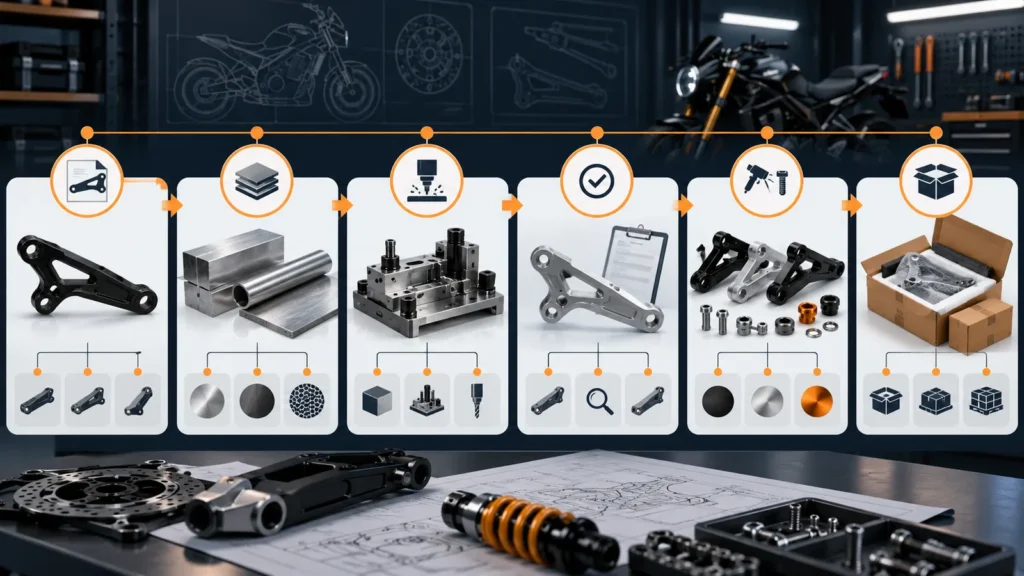
Tooling, Fixtures and Sample Approval
Tooling and fixtures can affect both the preparation sequence and the point at which repeat production becomes meaningful. A fixture may hold a formed tube or bracket in a repeatable position, but it does not by itself prove that the part fits the intended motorcycle.
Before asking for a firm schedule, clarify whether the project needs a new fixture, a fixture adjustment, a first sample, a vehicle check or a revision after the sample review. Then connect the approved drawing or reference sample to the sample and the fixture revision. If the sample is not approved, the batch reference is still open.
A useful planning brief separates these events:
- application and reference review;
- drawing, sample or fixture preparation;
- first-article or sample review;
- revision and approval, if required;
- repeat production, inspection and packing.
The supplier-evaluation checklist can help a buyer assess whether a supplier explains these stages clearly. It should not be used to assume that every supplier uses the same tooling or approval process.
Quantity, Model Mix and Version Stability
Quantity is rarely the only variable. Ask how the supplier expects the MOQ to be counted: by model, product reference, finish, hardware kit, packaging version or total order. A mixed-model request may need separate drawings, samples, setups or approval records even when the parts share a general design direction.
List each model and version separately. State which lines share a reference and which lines are independent. If the buyer expects to combine several models to reach a commercial quantity, ask the supplier to explain the rule in writing rather than assuming that all lines can be grouped.
Version stability matters as well. A request that changes model, mounting point, bracket, finish or packaging during quotation is not the same planning problem as a stable repeat order. Keep open changes visible and ask whether the quotation or schedule needs to be clarified or reissued.
Material, Finish, Hardware and Packaging Scope
Material purchasing, surface finish, hardware selection and packaging can all affect order readiness. The buyer does not need to assign a fixed number to each factor, but should define which ones are final and which ones remain under discussion.
For example, a private-label program may need an approved label layout, hardware-bag identification, carton marks or a protective packing method. Those requirements should be reviewed alongside the product reference, not added after production planning has already been treated as final.
Use the motorcycle-parts purchase-order checklist when the quotation has been selected and the agreed scope is ready to enter the PO. This article stays at the earlier planning stage and does not repeat the PO field list.
Order Readiness Before Requesting a Commitment
An order is easier to plan when the supplier can identify the application, approved reference, model list, quantity basis, finish, hardware, packing scope and approval owner. A buyer can use a short readiness check:
- Is the drawing, sample or product reference identified?
- Are model years, variants and mounting requirements separated?
- Is the quantity basis clear for each model or kit?
- Are tooling and sample decisions assigned to an owner?
- Are finish, hardware, labels and packing requirements defined?
- Are open changes listed before the supplier plans repeat production?
If the answer to one of these questions is no, request a planning assumption or clarification instead of asking the supplier to guarantee the final date. The Buyer Questions page can provide additional prompts, but the project-specific reference remains the controlling record.
Seasonal Capacity and Schedule Risk
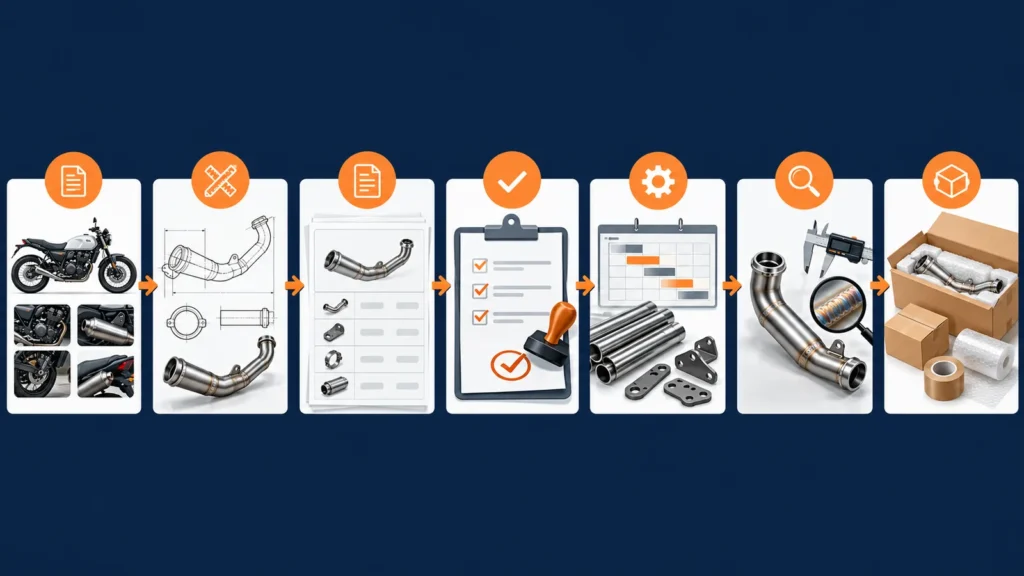
Capacity, material availability, outside processing, inspection queues and holiday arrangements can affect a plan. These factors should be discussed as risks and dependencies, not converted into a blanket promise. Ask what information is needed for a project-level schedule and which events would trigger a revised estimate.
A clear commercial response can distinguish between an indicative planning window and a confirmed production commitment. It can also identify the event that starts the relevant clock, such as an approved drawing, an accepted sample, a released PO or a confirmed packing instruction. The buyer should retain that definition with the quotation.
A Buyer Scenario Planning Table
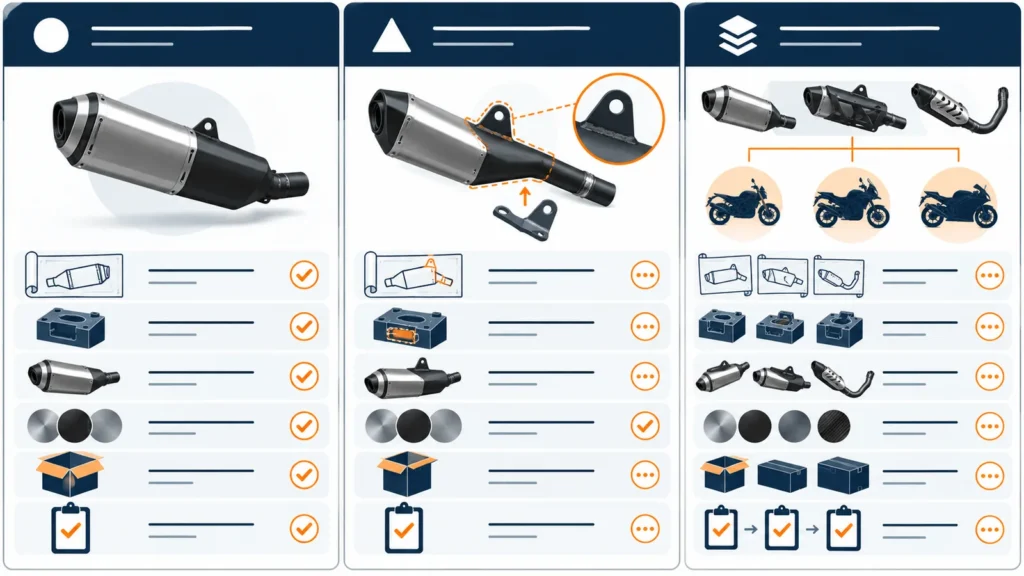
| Planning input | Possible effect | Buyer should confirm |
|---|---|---|
| Existing or new product | An approved reference may reduce development work; a new structure needs review. | Is there an approved drawing or sample? |
| Fixture or tooling requirement | New setup may add preparation and approval steps. | Is a fixture required, and who approves it? |
| Quantity and model mix | Multiple references may need separate setups or records. | Is MOQ counted by model, finish, kit or total order? |
| Finish, hardware and packing | Additional references can affect readiness and review. | Are finish, hardware and carton instructions final? |
| Sample status | An unapproved sample cannot be treated as the batch reference. | Has fitment and revision approval been recorded? |
When to Clarify, Requote or Hold
Clarify when the requirement is incomplete but the intended scope is still stable. Requote when the product, model mix, tooling, finish, packing or quantity basis changes the commercial scope. Hold release when the controlling reference or approval owner is still unclear.
Changes that affect MOQ or lead time should remain visible. The motorcycle-parts supplier change-control guide covers the later process for recording and approving changes; here, the buyer only needs to identify whether a change can invalidate the current plan.
Frequently Asked Questions
Is MOQ the same for every motorcycle-parts project?
No. It may depend on the product reference, model mix, material, tooling, finish, hardware, packing scope and the basis used to count the order. Ask the supplier to state the applicable basis for the project.
Does a smaller order always have a shorter lead time?
No. A smaller order may still require the same drawing review, fixture preparation, sample approval or special packing work as a larger order.
How do tooling and samples affect the production schedule?
They can add preparation and approval stages before repeat production is released. Connect the tooling and sample revisions to the approved reference before treating the batch schedule as firm.
Can different motorcycle models share one MOQ?
That depends on the supplier’s approved counting and setup rules. List the models separately and ask whether they share a reference, finish, hardware set, packing plan or production setup.
What should a buyer confirm before requesting a firm quotation?
Confirm the application, reference, model list, quantity basis, finish, hardware, packing scope, sample status, approval owner and any open change. Then ask the supplier to separate assumptions from confirmed commercial conditions.
Send a Complete Planning Brief
Before requesting a commercial commitment, send the application, approved reference or development status, model and version list, quantity basis, finish, hardware, packing requirements and approval contacts. Ask the supplier to identify the assumptions behind MOQ and lead time and to flag which events could require clarification or requotation.
For a project-specific review, send the planning brief and supporting drawing or sample through the XCMOTOPARTS quote contact. A clear brief helps both sides discuss what is ready, what is conditional and what still needs approval.