
A shipment can be counted, opened and moved into a warehouse without every unit being ready for sale. For motorcycle parts, a useful receiving inspection connects the delivered cartons and products to the approved order reference, records what was actually checked, and shows which stock is released, pending review or on hold.
Quick answer: Before stock release, identify the shipment and product version, record the condition at arrival, reconcile cartons and quantities, check the agreed scope against the approved reference, and keep received, inspected and released quantities separate. If a discrepancy is found, preserve the relevant product, packaging and records, then route it for review before treating the affected stock as available.
This guide is for importers, distributors, private-label teams and warehouse staff receiving motorcycle rear racks, crash bars and other tubular metal parts. It is an operational recordkeeping guide. It does not set a universal sampling rate, acceptance limit, reporting deadline or commercial remedy.
What Receiving Inspection Should Decide
Receiving inspection answers a narrower question than pre-shipment inspection: what can this warehouse identify, check and release today? The answer may apply to all stock, one product line, selected cartons or no units at all. A delivery can arrive complete while some cartons remain uninspected. A product can look acceptable while its version, hardware kit or packing reference is still unclear.
For the earlier factory-side stage, see the motorcycle parts quality inspection checklist. This guide begins after delivery and focuses on what the receiving team can identify, check and release.
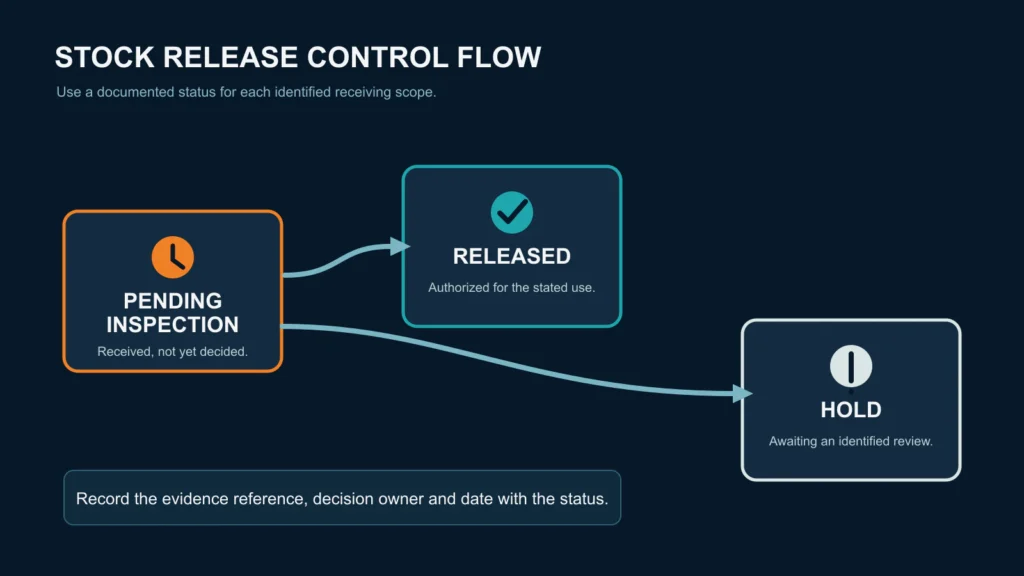
Use clear stock states in the record:
- Pending inspection: received but not yet checked against the agreed scope.
- Released: checked to the agreed receiving plan and authorized for the stated use or location.
- Hold: separated until an identity, quantity, condition or reference question is resolved.
These states describe the buyer’s own control of inventory. They do not prove a supplier error or decide liability.
Prepare the Receiving Reference Before the Shipment Arrives
Prepare the records that will be used to identify the delivery: purchase order, approved product list, BOM or kit list, drawing or approved sample reference where relevant, packing instruction, and shipping or export-document reference. Each document has a different role. The PO defines the commercial order; the BOM defines the intended kit; a carton mark identifies a physical shipping unit; and an approved drawing or sample helps distinguish the intended version from a similar-looking item.
The motorcycle parts BOM and kit checklist explains how a kit can identify brackets, spacers, fasteners and orientation. Use that approved list as a receiving reference instead of trying to recreate the kit from memory. For shipment paperwork, the motorcycle parts export documents guide helps buyers understand which document references should be compared before or at delivery.
Assign a receiving owner and state the planned inspection scope before arrival. For example, the buyer may agree to verify every carton label, inspect selected kits, or hold a model line until a designated reviewer checks the first units. Record the scope; do not make a small check look like a full inspection.
Record Delivery Condition Before Opening Cartons
Start with the delivery as received. Record the date, shipment reference, unloading location, carton count observed, and any visible condition that could affect later review. Take overview photographs where practical before moving, opening or combining cartons. If cartons are crushed, wet, torn, retaped or visibly mixed, keep the affected carton references separate.
This is not a claim conclusion. It preserves the condition of the delivery and gives the receiving team a starting point for identifying what was checked. The carton marking requirements guide explains why product identity, PO reference, carton number and version information help warehouse teams count and route cartons without guessing.
Reconcile Cartons, SKUs and Product Revisions
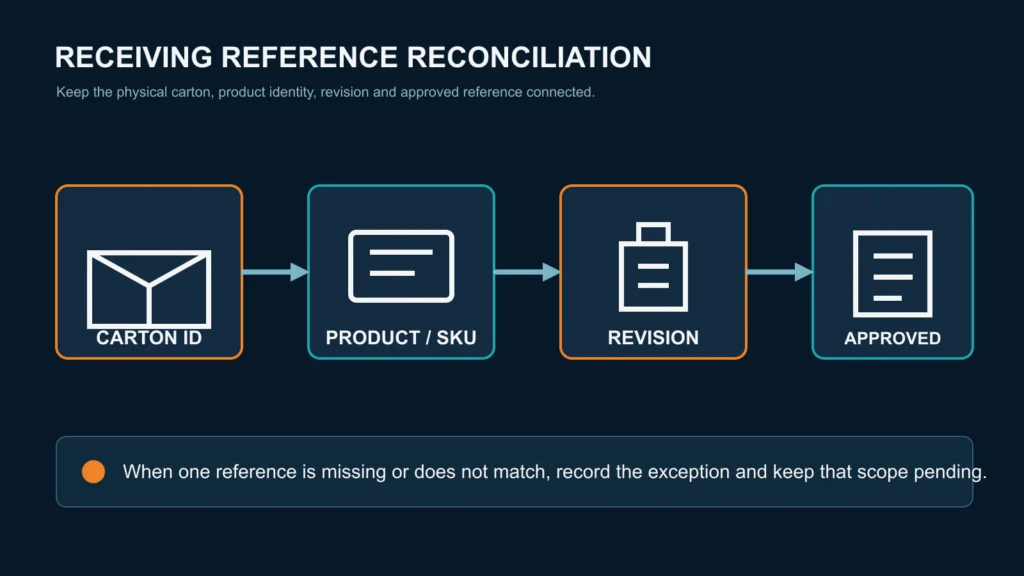
Reconcile each delivery line against the reference set. Match the carton or pallet identifier to the order line, product name, SKU or buyer part number, and the applicable revision or approved reference. Where the shipment contains similar motorcycle models, finishes or left/right components, create separate receiving lines. A general product name is rarely enough to protect against a version mix-up.
Record discrepancies precisely: missing carton, extra carton, unreadable label, wrong SKU, uncertain revision, mixed contents or an unmatched document reference. Do not replace the original identifier with a guessed one. If cartons have already been combined, record that limitation and preserve the traceable carton references that remain.
Check Selected Units Against the Approved Reference
Check the agreed units against the correct reference. Depending on the order, this may mean confirming a product identity, kit contents, left/right orientation, visible finish condition, label, hardware bag or packing arrangement. If a characteristic depends on a drawing, an approved sample or a model-specific fitment check, make sure the reviewer has that reference before deciding the result.
XCMOTOPARTS’ public Buyer Questions states that final packing checks include surface finish, hardware bags, labels, carton condition and packing photos. Those records can support a buyer’s receiving review, but they do not remove the buyer’s need to identify what arrived and what was actually checked. For product-level inspection criteria, use the relevant approved specification and the existing quality-inspection guidance rather than creating a new visual standard at the warehouse.
Separate Received, Inspected and Released Quantities
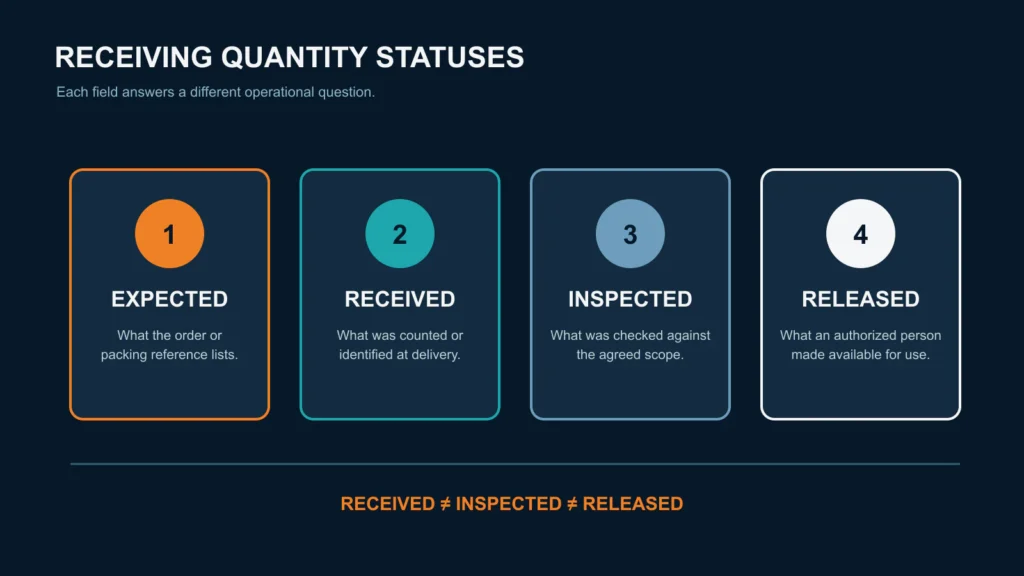
These quantities answer different questions:
| Quantity | What it records | What it does not prove |
|---|---|---|
| Expected | What the order or packing reference says should arrive. | That the shipment is physically present. |
| Received | What the receiving team counted or identified at delivery. | That every unit has been inspected. |
| Inspected | What was checked to the stated receiving scope. | That uninspected units meet the same condition. |
| Released | What an authorized person has made available for the stated use. | That a future claim, fitment issue or warranty question is impossible. |
If only part of an order is ready, state the exact line, carton or quantity being released. Keep the remainder pending or on hold. This prevents a warehouse system from turning an arrival count into an unsupported quality conclusion.
Use a Receiving Record to Control Stock Status
A simple receiving record makes the decision reviewable. Use one line for each product, revision, carton group or inspection scope that needs to remain separate:
| Field | Record |
|---|---|
| Shipment and order reference | PO, packing or delivery reference. |
| Product identity | SKU, product name, model/version and approved reference. |
| Carton or batch reference | Carton numbers, labels or other traceable identifiers. |
| Expected, received and inspected quantity | Keep each quantity in its own field. |
| Observation and evidence | Neutral note plus photo, document or sample reference. |
| Stock status | Pending inspection, released or hold. |
| Decision owner and date | Person authorized to release, retain or escalate the line. |
A record does not need a complicated system. It needs enough detail for a colleague to understand why a quantity is available, pending or isolated. Keep the evidence reference with the line rather than leaving it inside an unlabelled photo folder or message thread.
Route Exceptions Without Releasing Unchecked Stock
When a product, kit, label, carton or condition appears wrong, separate the affected scope and document what was observed. Then determine the next review path. A missing fastener may need a kit-list comparison; an uncertain revision may need the approved drawing or sample; transit damage may need packaging and receiving-condition photographs; a possible product issue may need a supplier-quality review.
The motorcycle parts defect claim checklist covers the deeper evidence package for a supplier review. Link the receiving record to that evidence rather than repeating the full investigation in the warehouse log. Do not clean, repair, redistribute or discard the affected evidence before the relevant review owner has determined the next step.
Frequently Asked Questions
Is received quantity the same as released quantity?
No. Received quantity records what arrived or was counted. Released quantity records the stock that an authorized person made available after the agreed receiving checks. The two can be different.
Can a buyer release part of a delivery?
Yes, when the buyer’s own receiving plan and records clearly identify the released cartons, products or quantities. Keep the remaining scope pending or on hold until its status is decided.
What should be checked before motorcycle parts enter saleable stock?
Check the agreed identity, quantity, product or kit reference, carton/label connection, selected condition or content checks, and any exception record required by the order. The exact scope should be agreed for the product and buyer process.
What if a carton is damaged but the product looks acceptable?
Record the carton condition, product position and relevant photographs before deciding stock status. A visible condition does not automatically assign cause, but it may require the affected scope to remain separate for review.
When should the supplier be contacted?
Contact the supplier after the relevant order, product, carton or batch reference and observation have been recorded. For an existing XCMOTOPARTS order, send the available evidence to the person handling that order; use the contact page for a new requirement or future-order discussion.
Agree Receiving Requirements Before the Next Order
The most useful receiving checklist is agreed before the shipment leaves. For the next order, define the product references, kit list, carton identifiers, documents, planned inspection scope, evidence format, stock-status owner and escalation contact. This gives the supplier and the receiving team the same reference without treating a general blog checklist as a substitute for the order agreement.