OEM motorcycle parts branding requirements should be defined before batch production, not added as a last-minute packaging request. For importers, wholesalers and private-label buyers, the branding brief may affect the product mark, finish reference, labels, hardware bag, inner packaging, carton information and final approval record.
A clear brief helps the buyer and supplier distinguish the approved motorcycle part from the approved branded presentation. It also reduces avoidable revisions when several models, markets or SKUs are involved.
Quick Answer: What Should a Buyer Confirm?
Before approving OEM motorcycle parts branding, confirm:
- The exact product, motorcycle model and SKU.
- Who owns or is authorized to use the brand.
- The requested logo location, size and orientation.
- The proposed marking or labeling method.
- The approved color and surface-finish reference.
- The content required on product, bag and carton labels.
- Barcode, model, language and target-market responsibilities.
- Packaging artwork and carton-mark requirements.
- A revision-controlled proof or sample for final approval.
The supplier should then confirm which requests are practical for the specific product and production route.
Separate Product Approval from Brand Approval
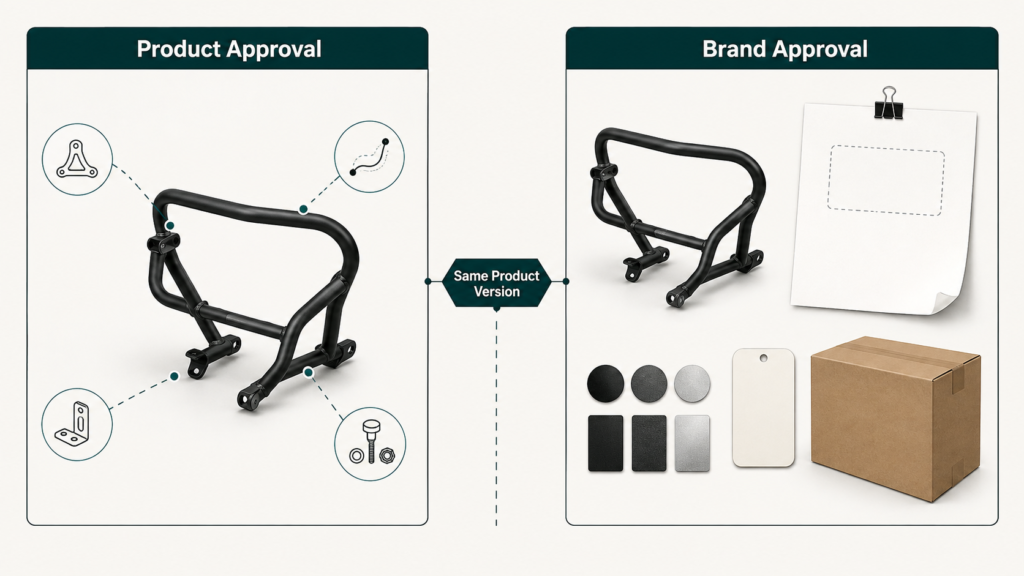
A motorcycle crash bar, rear rack or tubular part can be structurally correct while its branded presentation is still wrong. Buyers should therefore manage two connected approvals.
Product approval covers the motorcycle version, mounting points, tube route, brackets, hole positions, clearance, material, finish and hardware. Brand approval covers the visible mark, color reference, label content, packaging artwork and SKU identification.
For a new product, complete the structural review before locking the final branding layout. The XCMOTOPARTS custom tubular motorcycle parts development guide explains why drawings, samples, mounting photos and version information should be reviewed before a batch reference is confirmed.
Confirm Brand Ownership and Usage Responsibility
The buyer should confirm that it owns the brand or has permission to use the supplied name, logo, symbol and packaging artwork in the intended markets. A factory can review whether a requested mark is practical to produce, but it should not be expected to determine the buyer’s trademark rights.
The World Intellectual Property Organization explains that protected brand elements can include names, symbols and logos, and that protection is connected to particular goods, services and markets. Buyers should obtain appropriate professional advice when trademark or market-specific questions apply.
Include the responsible brand owner or license holder in the project record and identify who can approve artwork revisions. This is especially important when a sourcing company, importer and retail brand are different organizations.
Prepare One Clear Branding Brief
A useful branding brief connects every artwork item to a product reference. It should identify:
- Product name, model and buyer SKU.
- Target sales market.
- Brand name and logo reference.
- Requested logo position, approximate size and orientation.
- Product color or finish reference.
- Product-label content.
- Hardware-bag label content.
- Inner-pack or retail-pack information.
- Outer-carton marks.
- Required languages.
- Barcode or product-code information.
- Approval contact and revision date.
Send a master artwork file rather than relying on an image copied from a messaging application. Ask the supplier which file formats it accepts; do not assume that every factory, marking process or packaging vendor uses the same format.
Match the Branding Method to the Product
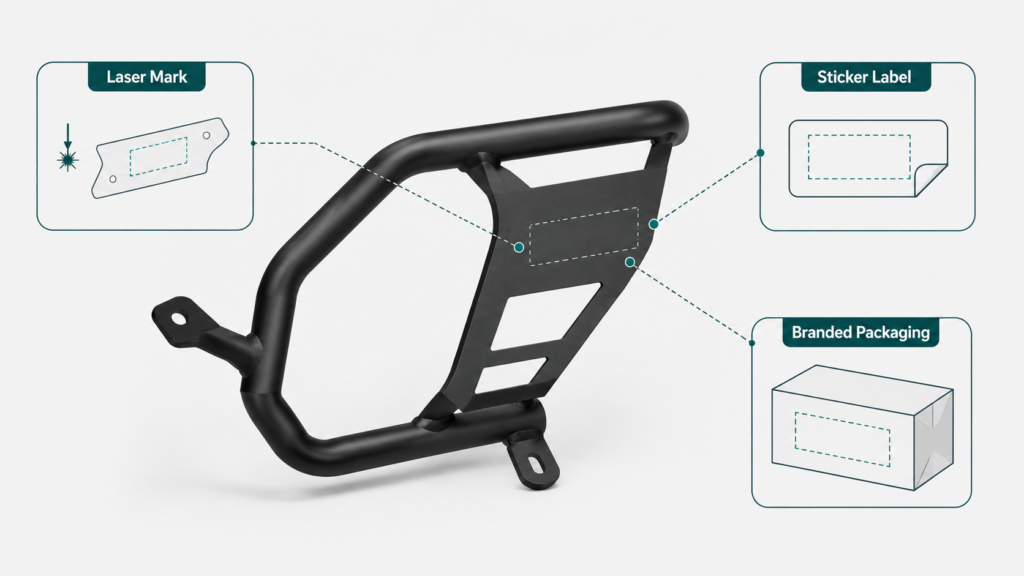
XCMOTOPARTS publicly lists practical logo support through laser marking, sticker labels or branded packaging details in its OEM process. These are available discussion options, not a promise that every method suits every part.
A logo placed on a flat bracket may require a different review from a mark near a curved tube, weld, mounting hole or coated edge. The buyer and supplier should check:
- Whether the proposed area is flat, curved or interrupted.
- Whether the mark remains visible after installation.
- Whether the location interferes with a hole, bracket or weld.
- Whether the process is compatible with the approved surface.
- Whether the logo orientation is correct on left- and right-hand parts.
- Whether a physical sample or electronic proof is needed.
Do not approve only a separate logo image. Approve the logo shown in context on the correct product version.
Control Color and Surface Finish Separately
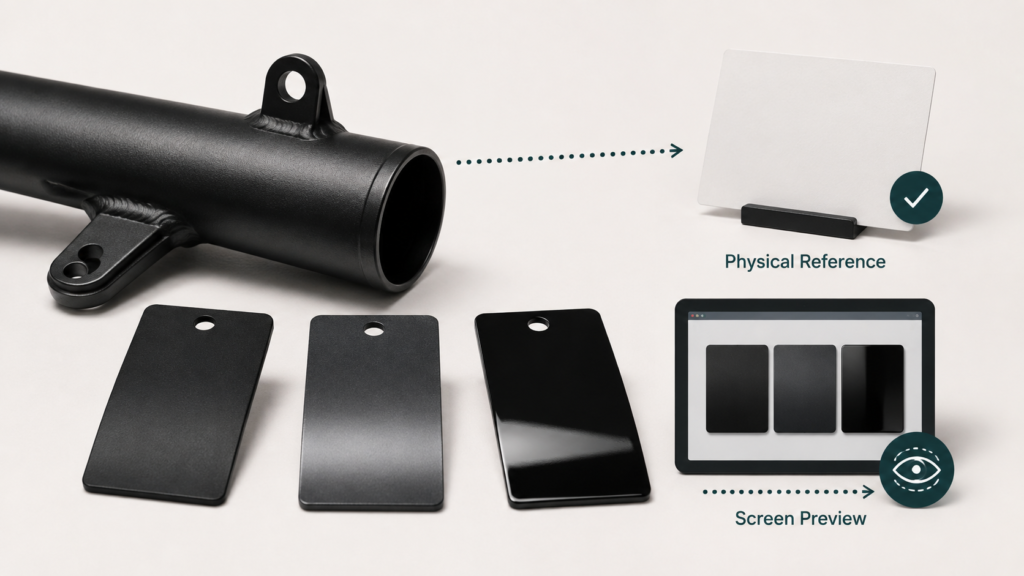
A color name such as “black” may not be specific enough for a repeat order. The branding brief should identify the agreed color or physical reference and connect it to the approved surface-treatment requirement.
The buyer should also define which visible variations require review and how approval will be recorded. This is a brand-consistency decision as well as a manufacturing decision. For background on material and surface choices, see the motorcycle parts material and finish guide.
Do not use a screen image as the only color authority. Screens, lighting and camera processing can change how a finish appears. Ask the supplier what type of color or sample reference can be used for the project.
Separate Product Marks, Labels and Packaging Data
Different information belongs in different locations. Combining everything into one artwork file makes revisions harder to control.
| Item | Information to confirm |
|---|---|
| Product mark | Brand, position, size, orientation and approved method |
| Product or model label | Model reference, buyer SKU and required language |
| Hardware-bag label | Product reference and kit identification |
| Inner packaging | Brand artwork, product name and handling information supplied by the buyer |
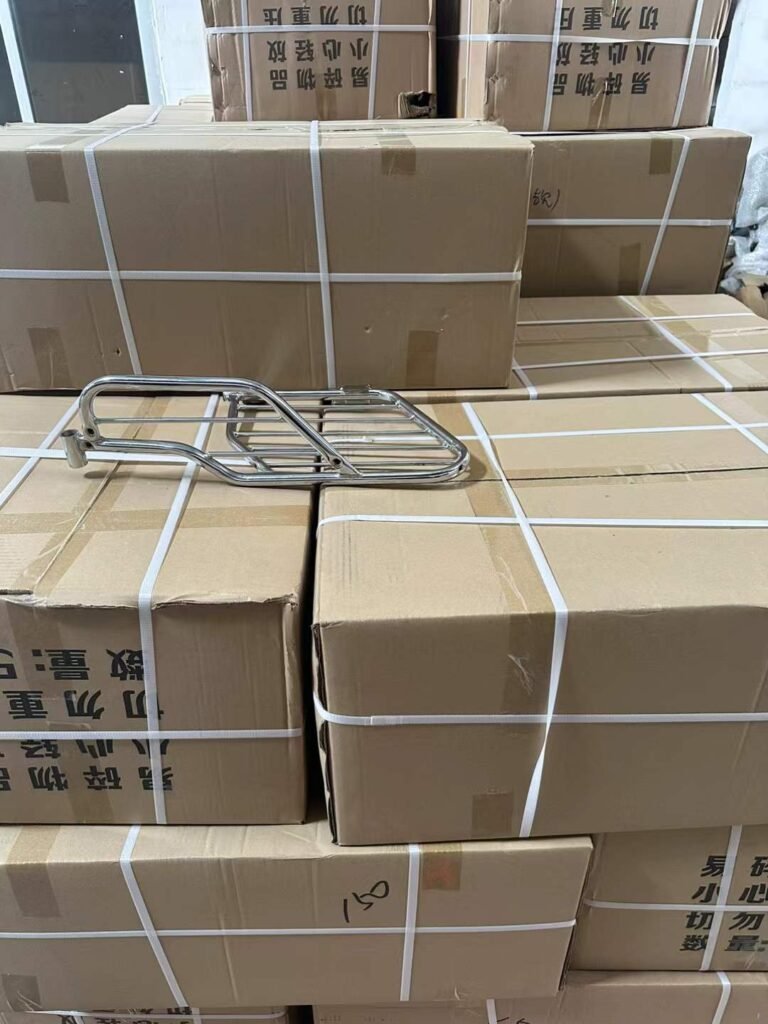
| Outer carton | Shipping mark, model, quantity and receiving information |
| Barcode | Code owner, number, placement and print approval |
XCMOTOPARTS states that private-label projects can include labels, carton marks, hardware-bag layout and protective packing according to the buyer’s requirements. The private-label packaging answer and wholesale packaging checklist provide the related packaging context.
These pages do not replace the buyer’s responsibility to identify any legally required wording, warnings, origin information or market-specific labels.
Assign Responsibility for SKUs and Barcodes
The buyer should state who creates and approves model codes, SKUs, barcode data and language content. The factory should not have to infer whether two similar motorcycle versions share the same retail identity.
According to GS1 guidance, the brand owner is normally responsible for allocating the Global Trade Item Number, regardless of where the product is manufactured. Buyers using GS1 identifiers should therefore supply the correct data and confirm how it will be presented.
The artwork proof should show the readable text and the barcode area. A final scan or print-quality check may be appropriate, but the exact validation method must be agreed for the project.
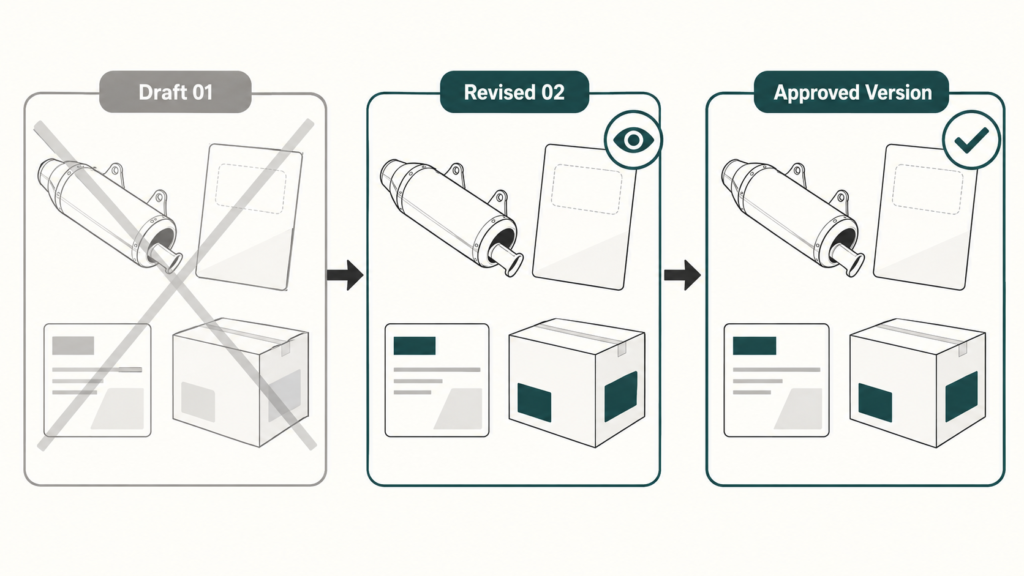
Use a Revision-Controlled Approval Record
Create one approval pack that identifies:
- Product and model version.
- Logo layout.
- Color and finish reference.
- Label artwork.
- Packaging artwork.
- Carton marks.
- Revision number and date.
- Buyer approval contact.
- Supplier confirmation of the production reference.
At XCMOTOPARTS, the published project workflow reviews structure and fitment first, then records finish, fasteners, labels, cartons and the batch version for quotation. The packaging workflow also treats labels and hardware preparation as controlled packing details. These existing practices provide a practical base for a branding approval record without assuming that one process fits every order.
When artwork changes, replace the old reference clearly. A revised logo should not leave the product label, hardware bag and carton using different versions.
What to Send with an OEM Branding Inquiry
A useful first inquiry should include the motorcycle model, product drawing or reference photo, expected quantity, preferred finish, brand artwork, proposed logo position, labels, packaging request and target market.
If some details are not final, identify them as pending rather than supplying an unapproved guess. XCMOTOPARTS can review the product and branding request through the OEM solution page. When the project information is ready, use the contact form to send the model, quantity, finish and packaging requirements.
Frequently Asked Questions
Can every motorcycle part use the same logo method?
No. The suitable method depends on the part geometry, logo position, approved surface and required appearance. Send the product reference and proposed location so the supplier can confirm what is practical.
Should branding be approved before the product sample?
The branding direction can be discussed early, but the final placement should be checked against the approved product version. Structural or bracket changes may affect the available logo area.
Who should provide the barcode and label wording?
The buyer or brand owner should provide and approve the relevant product codes, barcode data, languages and market-specific wording. The supplier can then review placement and production practicality.
Is branded packaging the same as protective packaging?
No. Branded packaging controls identity and presentation; protective packaging controls how the part, finish and hardware are protected and organized. Both should be reviewed, but they have different approval criteria.
Start With One Approved Reference
A successful private-label project needs more than a logo file. It needs one approved reference connecting the correct motorcycle part to its mark, finish, labels, packaging and revision.
Send XCMOTOPARTS your product drawing or photo, motorcycle model, branding request, target market and packaging needs through the quotation page. The team can review which details are ready and which still need confirmation before quotation or sample work.