
Quick Answer
A custom motorcycle parts factory quote is affected by more than the visible shape. Key factors include application, fitment, structure, production steps, reference completeness, tooling, material and finish, quantity, hardware, packaging and approval evidence.
A photo and target quantity may support an early estimate, but a reviewable quotation needs a clearer reference: what must fit, what must be produced, what must be packed and what is approved. This is why similar-looking parts can receive different quotations.
Why Similar-Looking Parts Can Receive Different Quotes
A rear rack, crash bar, bracket or other tubular component can have a simple outline but several cost-sensitive interfaces. Hole spacing, bracket angle, tube geometry, weld position, left/right orientation and clearance can change the work required.
Cost also depends on project stage. An early request may support only a preliminary estimate, while a batch-ready quotation must define the approved version, quantity, finish, hardware and packing scope. Buyers comparing factories can also use the motorcycle parts supplier evaluation checklist to assess how clearly each supplier explains its assumptions.
Quick Comparison: What Can Change the Quote?
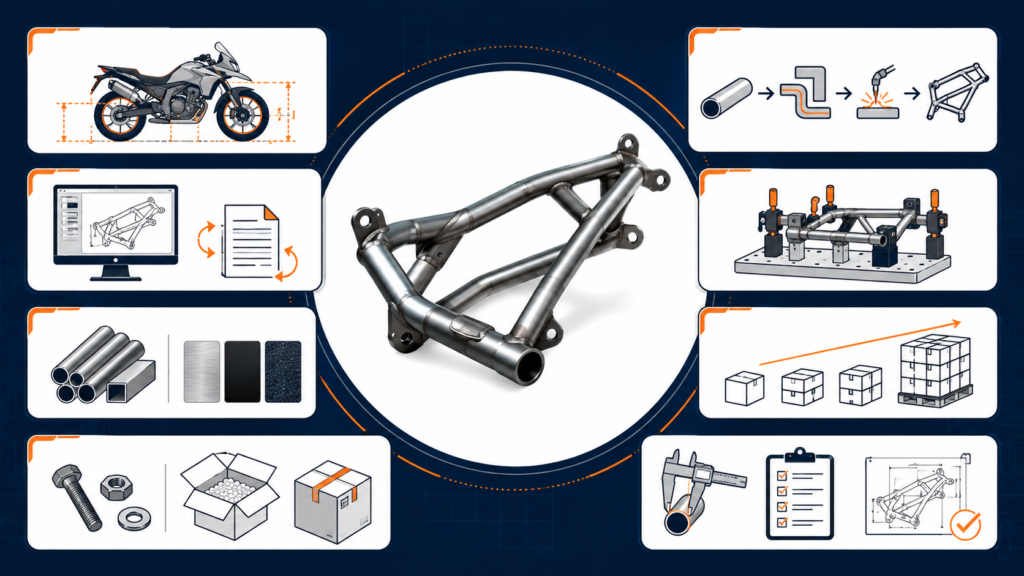
| Cost factor | What the factory needs to review | Buyer question |
|---|---|---|
| Application and fitment | Exact model or vehicle version, mounting points and clearance | Are we quoting the same application? |
| Structure and process | Tube geometry, brackets, holes, welds and relevant production steps | Which operations create the part? |
| Drawings, samples and revisions | Controlled reference and current revision stage | Is this an estimate or an approved scope? |
| Fixtures and tooling | Positioning requirements and whether existing tooling can be adjusted | Does the fitment require new or modified tooling? |
| Material and finish | Material description, coating or finish, color and preparation | What finish is included in the quotation? |
| Quantity and version stability | Estimated quantity, repeat scope and expected changes | Will the quoted version remain stable? |
| Hardware and packaging | Fasteners, labels, protection, cartons and special packing | What is included beyond the main metal part? |
| Inspection and documentation | Fitment review, approval records, photos and other requested evidence | What review work must be documented? |
Exact Vehicle Version and Fitment Evidence
The first factor is whether the factory is quoting the correct application. A model-specific motorcycle part may require the brand, complete model name, production year and market version. A Three Wheeler Spare Part may also need its body configuration and intended use.
Mounting points matter because a similar model name does not prove that holes, brackets, tube route or clearance are the same. Vehicle photos, mounting-area photos, basic dimensions or a physical sample give the factory a more reviewable starting point than a catalogue photo alone.
For more background, see the custom tubular motorcycle parts development process. The quotation question is which fitment evidence is included in the scope.
Structural Complexity and Production Steps
Two similar outlines can require different work: tube cutting, bending, forming, drilling, bracket preparation, welding, polishing, surface preparation or packing.
Extra brackets, left- and right-hand pieces, welded nuts, close clearances and restricted hole access can also change the scope. Ask which features are included.
Drawing, Sample Completeness and Revision Stage
A quotation is easier to compare when the factory knows whether the request is based on a photo, drawing, physical sample, measured dimensions or a controlled combination. State whether it is preliminary, sample-based or tied to an approved production reference.
Conflicting references create review work. A newer sample may differ from an older drawing, or the buyer may ask the factory to measure a sample and review a fitment change. Show that work in the project discussion.
After sample confirmation, a structural modification normally needs another technical and quotation review. Even a small appearance adjustment should be confirmed before production. See the motorcycle parts quote checklist for RFQ preparation.
Fixture, Jig and Tooling Requirements
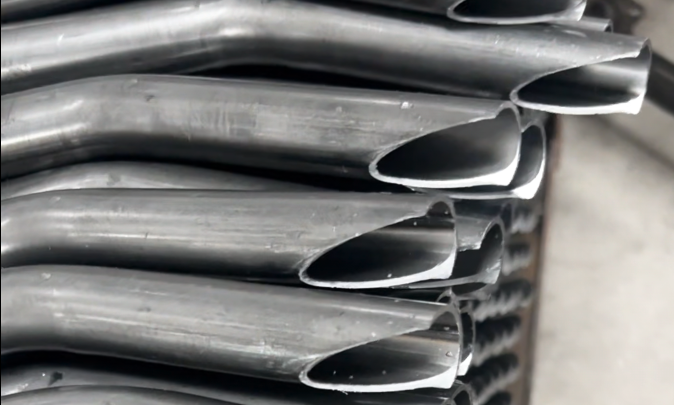
Fixture and tooling requirements are important custom motorcycle parts cost factors because they control how the part is positioned. If mounting points, hole spacing, bracket angle, tube geometry or weld positions change, the factory may need to adjust an existing fixture or develop a new one.
A small change may be handled by adjusting a fixture; a larger change may require new tooling. The decision depends on the approved reference and the part’s interfaces, not on a promise that tooling will be “simple.”
Ask the factory to separate product work from fixture or tooling requirements. A sample request and a stable repeat-order version may not carry the same setup scope.
Material and Surface-Finish Requirements
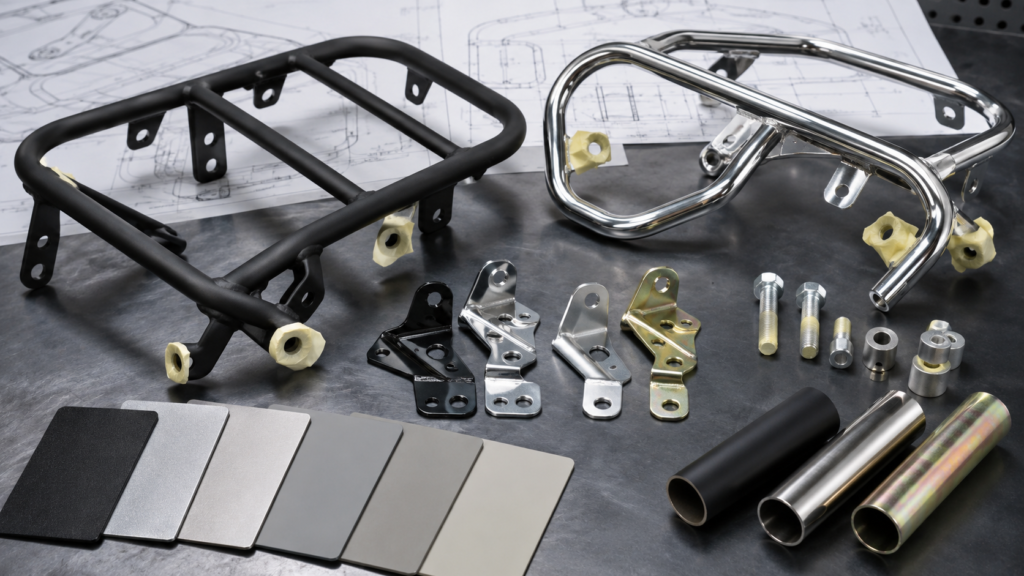
Material and finish should be part of the product scope. “Metal,” “black” or “matte” may be too broad when the buyer expects a specific visible condition, preparation step or finish reference. Custom powder coating, polishing, plating, surface pre-treatment or a special color can change the quote.
Surface requirements may affect which areas need protection during processing. Holes, threads or mounting interfaces may need masking or other treatment. Ask what finish and preparation are included and what reference will be used for approval.
For terminology and preparation guidance, review the motorcycle parts material and surface finish guide. Clarify the finish at quotation stage instead of comparing a standard black finish with an unpriced custom requirement.
Quantity and Version Stability
Quantity affects setup, sample work, packaging and repeat production. An estimated range and project stage help the factory understand the request. Version stability matters too: changes after quotation can affect structure, tooling, finish, hardware or packing, so one version’s quote should not be treated as a commitment for a later version.
Hardware, Labels and Packaging Scope
The main metal part is only one part of the deliverable. A project may include fasteners, spacers, brackets, hardware bags, labels, barcodes, instructions, private-label materials, custom cartons or pallet packaging. Each addition expands the preparation and packing scope.
Single-piece protection, foam, separators and other packing details can change the scope. State whether the request covers only a bulk carton or individual protection and identification. Use the motorcycle parts packaging checklist.
Inspection, Documentation and Approval Evidence
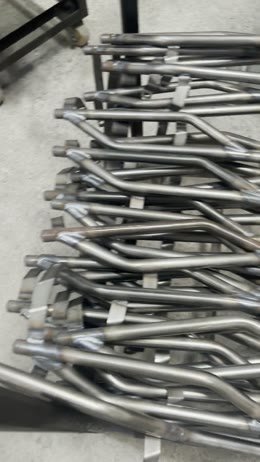
Inspection and approval work can affect a quote when the buyer requires more than a finished-part photograph. The requested evidence may include fitment review, critical-dimension notes, finish references, hardware checks, label checks, packing photos, revision records or an approval summary.
Not every project needs the same document set, and this article does not promise a particular inspection form, sampling plan or test result. See the motorcycle parts quality inspection checklist and the motorcycle parts batch consistency guide for later-stage review.
Representative Quote Difference: What Is Actually Changing?
Consider two representative, non-customer scenarios. The first request is for a rear rack with a confirmed drawing, conventional black powder coating and a standard carton. The second request involves measuring a sample, developing a new positioning fixture, adding extra brackets, preparing a hardware kit, matching a custom color and protecting each piece with foam.
The second request carries a different technical review, tooling scope, finish requirement, accessory package and packing arrangement. This is a representative explanation, not a public customer case or fixed pricing example.
Decision Path: Preliminary Estimate, Reviewable Quotation or Batch-Ready Quotation
- Preliminary estimate: Photo, vehicle reference, basic dimensions, expected quantity and general finish direction support an early discussion.
- Reviewable quotation: The drawing or sample, application, mounting points, material, finish, quantity, hardware, packaging and likely tooling can be compared.
- Batch-ready quotation: The version, revision, scope, quantity, finish, hardware, packing and approval evidence are stable.
If the stage is unclear, ask which assumptions could change the scope. Do not treat a preliminary estimate as a batch-ready quotation.
Common Buyer Mistakes
- Comparing quotes for different motorcycle model years or market versions.
- Sending a product photo without identifying mounting points, clearance or the intended application.
- Assuming a sample change will not affect fixture, finish, hardware or packing work.
- Comparing a standard finish with an unpriced custom color or surface process.
- Requesting a unit quote without stating whether the hardware kit and labels are included.
- Accepting a preliminary estimate as a fixed price before the drawing, sample and revision are reviewed.
- Ignoring protective packaging until after the main part has been quoted.
Frequently Asked Questions
What are the main motorcycle parts manufacturing cost factors?
The main factors are application and fitment, structure and process, drawing and sample completeness, tooling, material and finish, quantity, hardware and packaging, and requested approval evidence.
Why can two similar motorcycle parts receive different factory quotes?
They may use different vehicle versions, mounting points, materials, finishes, tooling, hardware, packaging or approval requirements. The outline alone does not define the manufacturing scope.
Does a sample change affect the quotation?
A structural change after sample confirmation normally needs another technical and quotation review. A smaller appearance adjustment should also be confirmed before production.
What information is needed for a custom motorcycle parts factory quote?
Start with the product or application, vehicle reference, drawing or sample, fitment information, expected quantity, material and finish, hardware, labels, packaging and tooling needs. The package depends on the project stage.
How can a buyer tell whether a quotation is preliminary or ready for production?
Ask whether the product version, revision, fitment, material and finish, quantity, hardware, packaging and approval evidence have been reviewed. Open assumptions mean the quotation is preliminary or reviewable, not batch-ready.
Conclusion: Compare the Scope Before Comparing the Number
A custom motorcycle parts quote becomes easier to understand when both sides compare the same product reference and scope.
For a project discussion, send the product or vehicle reference, drawing or sample, mounting information, expected quantity, material and finish, hardware, labels and packaging scope. Review the XCMOTOPARTS development information and use the B2B contact and quote path.