Motorcycle parts supplier change control gives buyers a way to review a proposed revision before it enters production or shipment. A change may affect the product structure, material, fixture, finish, hardware, label, packaging or inspection method. Even when the part name and price remain the same, the approved product may not.
This buyer guide applies to model-specific rear racks, crash bars, guards and other tubular metal motorcycle parts. It explains how to identify a change, request evidence, choose the right approval route and record the effective order or batch. It is not a product-specific engineering approval, contract clause or regulatory determination.
Quick Answer: How Should Buyers Control a Supplier Change?
Start with the current approved product reference. Require the proposed change to identify what is different, why it is needed, which orders or batches are affected and when it would take effect. Review fitment, structure, material, finish, hardware, packaging, inspection and commercial consequences. Then decide whether to approve the documents, request a revised sample or first article, re-quote the scope, limit the change to a trial batch or place the change on hold.
Create the Approved Baseline Before Reviewing a Change
A change cannot be evaluated against a vague product name. The buyer and supplier first need a baseline that shows what is currently approved. Depending on the project, it may include:
- buyer SKU and supplier product reference;
- motorcycle make, model, year and market version where fitment matters;
- current drawing, sample or controlled reference-photo revision;
- mounting interfaces and agreed critical dimensions;
- tube, bracket and hardware specification;
- surface finish and visible appearance reference;
- logo, label, carton and packing requirements; and
- the order, batch or date from which the current version applies.
The motorcycle parts purchase order checklist helps buyers connect the approved product reference with the commercial order. The traceability requirements guide explains how orders, revisions, batches and cartons can remain connected after approval.
Define Which Changes Require Notification
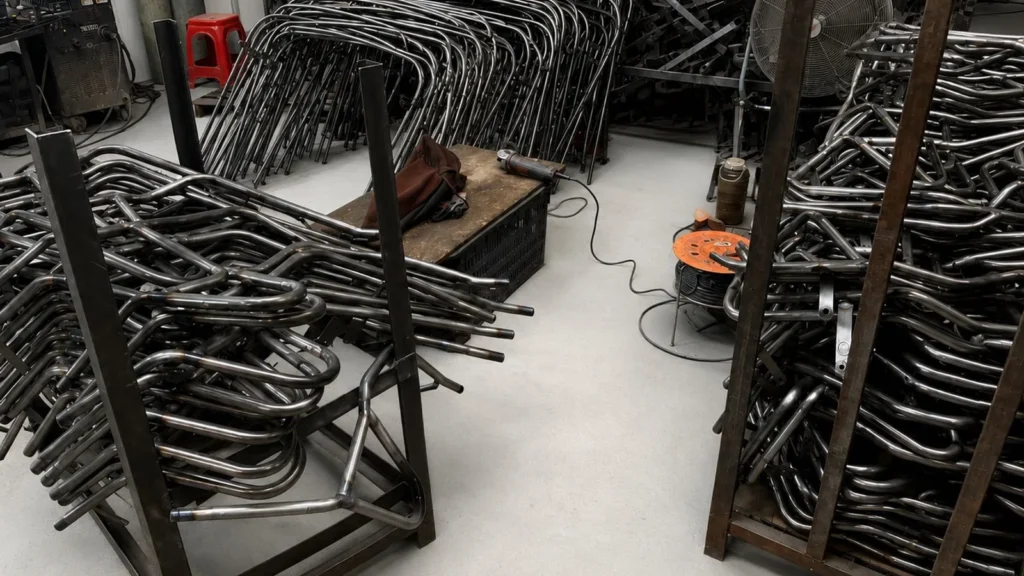
Not every equipment adjustment or routine maintenance event needs buyer approval. The notification rule should focus on changes that may affect the agreed product, evidence, supply or receiving process. A buyer may ask to be notified about changes to:
- product construction, tube route, bracket shape or mounting interface;
- material, tube size, wall thickness or supplied component;
- new or modified fixtures, tooling, dies or production methods that may affect the part;
- sub-suppliers for relevant materials, hardware or outside processes;
- surface treatment, color, gloss or other approved appearance attributes;
- fasteners, spacers, brackets or other kit contents;
- test, measurement or inspection methods;
- logo, label, packaging material, carton or packing method; and
- manufacturing location when the buyer has made it part of the approval scope.
Graco’s public Supplier Request for Change page is one example of a company defining notification triggers for material, tooling, process, inspection, appearance and packaging changes. Its requirements apply to Graco suppliers, not automatically to XCMOTOPARTS projects. Buyers should write a change-notification scope that fits their own product and contract.
Require a Complete Change Request, Not a Short Sales Message
“Improved material,” “new version” or “same fit” does not show what changed. Ask the supplier to prepare one comparison record containing:
- current approved product and revision;
- proposed product and revision;
- reason for the change;
- temporary or permanent status;
- side-by-side list of known differences;
- affected purchase orders, products, cartons or batches;
- proposed first effective order or batch;
- evidence supplied for each affected characteristic;
- open questions and responsible approval owner; and
- commercial effects on price, MOQ, schedule, packing or old stock.
For XCMOTOPARTS tubular projects, the public development process already separates model and market identification, drawing or sample review, tube structure and bracket review, sample fitment, finish, hardware and packing. Those same product areas form a practical checklist when a revision is proposed. This does not mean every project uses a formal change-control system; the required record should be agreed before the change is released.
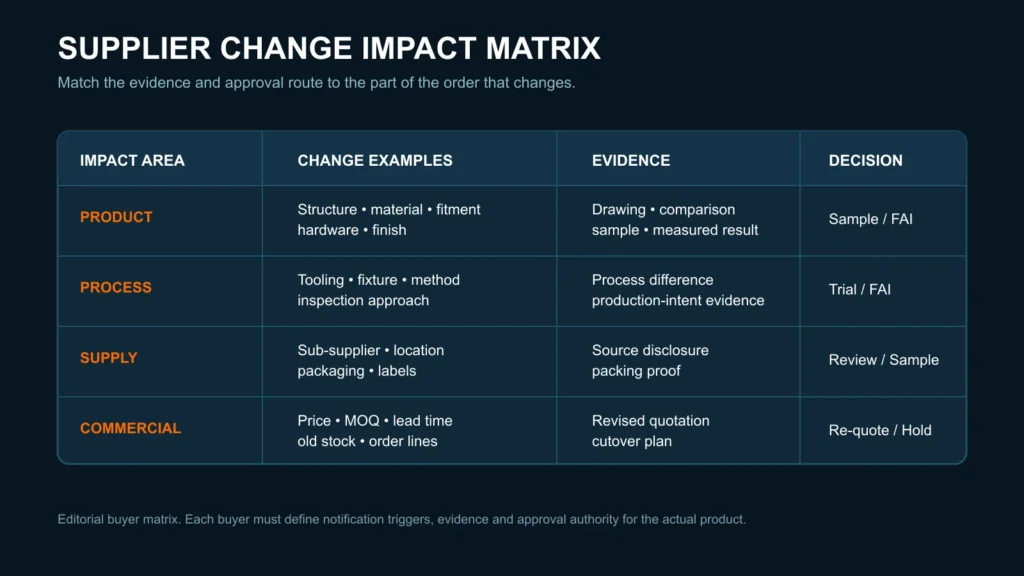
Review the Change by Its Actual Impact
A low-cost change can still affect installation, stock identification or after-sales support. Review the impact instead of classifying the change by price alone.
| Impact area | Questions to ask | Possible evidence |
|---|---|---|
| Fitment and interfaces | Do holes, brackets, clearances or supplied spacers change? | Revised drawing, measured comparison, installation photographs or sample review |
| Structure and process | Does tube route, bending, welding, fixture or production sequence affect the approved part? | Revision comparison, first-off part, fixture photographs or inspection record |
| Material and finish | Does the change affect the specified material, color, appearance or protection requirement? | Specification comparison, approved finish reference or relevant test evidence |
| Hardware and kit | Do quantities, dimensions, side assignment or installation steps change? | Updated kit list, hardware layout and installation reference |
| Branding and packaging | Do labels, carton marks, protection points or retail presentation change? | Artwork proof, packing sample, carton layout or pack photographs |
| Commercial scope | Does the change affect price, MOQ, lead time, tooling, remaining stock or order lines? | Revised quotation, purchase-order change or stock transition plan |
The evidence should answer the question created by the change. A product photo may show appearance but not hidden material. A drawing may show dimensions but not actual finish. A hand-selected sample may fit but may not prove that a new production setup can repeat the approved result.
Choose the Correct Approval Route
The buyer can choose one of several routes based on consequence and uncertainty:
- Document approval: suitable when the change is administrative or the supplied evidence fully answers a low-risk question.
- Revised sample: suitable when appearance, fitment, hardware or another visible feature must be reviewed physically.
- First article or controlled trial batch: suitable when a tooling, fixture, process or production-intent revision must be checked before normal output.
- Re-quotation: required when the product scope, tooling, finish, packaging, MOQ or schedule changes.
- Conditional approval: limits the change to a defined quantity, order, market or time while additional evidence is collected.
- Hold or reject: appropriate when the difference, evidence or approval authority remains unclear.
A supplier should not silently place the new version into an unchanged order line. If the buyer permits certain non-notifiable changes, those boundaries should be stated in the commercial or quality agreement.
Decide When a New Sample or First Article Is Needed
Request a new sample when physical review can resolve the risk. A bracket revision may require installation on the correct motorcycle version. A hardware change may require a complete kit layout and assembly check. A finish change may require an approved visual reference and handling review.
A first article may be useful when the proposed version must be produced with the intended fixture, tooling, process and inspection method before batch release. The review should target the changed characteristics and their related interfaces. It should not become a generic checklist disconnected from the reason for the change.
The motorcycle parts batch consistency guide explains how the approved reference is carried into repeat production. Change control comes first: it decides whether the baseline itself may change.
Control the Effective Order, Batch and Old Stock
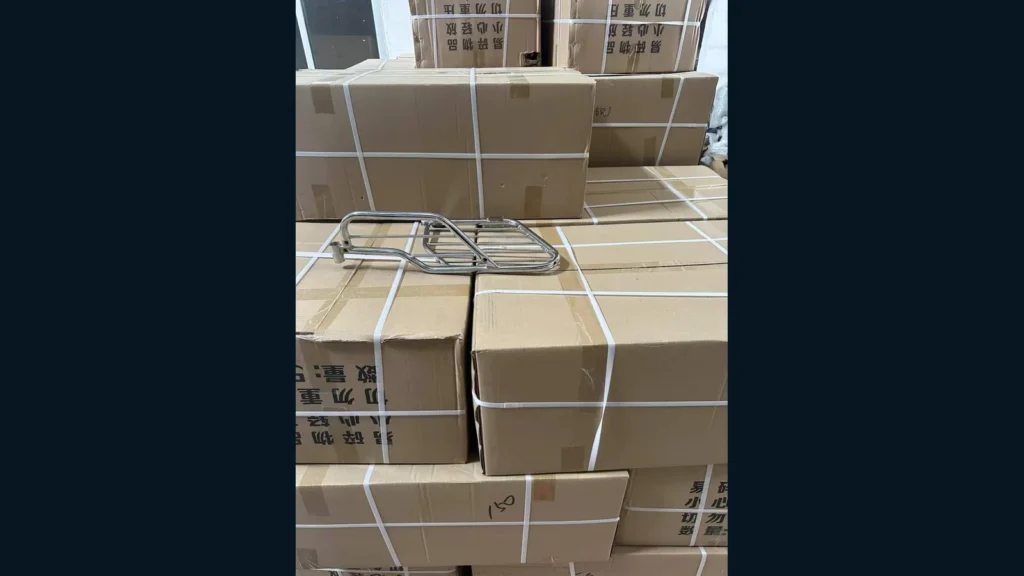
An approval should identify the first order, batch, carton range or date to which the new version applies. Also record the last old version and whether old and new stock may be mixed. If they are not interchangeable, separate product references, order lines, labels and storage locations may be needed.
Update the drawing or approved sample record, purchase order, catalog data, kit list, packing reference and receiving instructions that the change affects. Do not rely on one email while other systems continue to show the previous version. The catalog data checklist can help distributors keep public product information aligned with the released configuration.
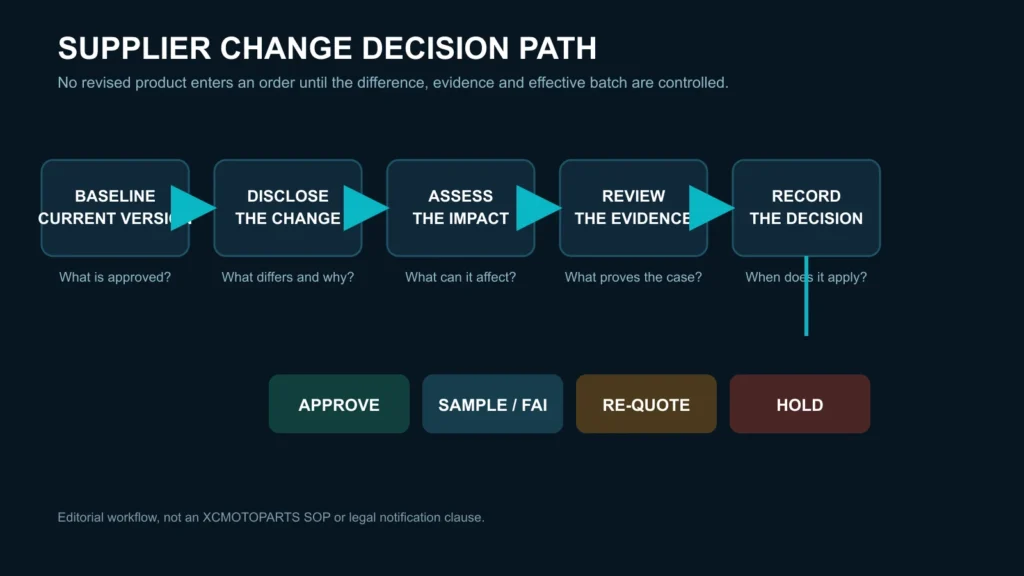
Supplier Change-Control Decision Path
- Identify the current approved product and revision.
- Require a written comparison of the proposed change.
- Identify affected fitment, structure, material, finish, hardware, packing and commercial terms.
- Request evidence that answers each affected characteristic.
- Choose document approval, sample, first article, trial batch, re-quotation or hold.
- Record the decision, limitations and approval owner.
- Define the first new-version order or batch and the last old-version stock.
- Update purchasing, production, catalog, packing and receiving references before release.
Frequently Asked Questions
What motorcycle parts supplier changes should require buyer approval?
Buyers should define their own triggers. Common examples include product structure, material, mounting interfaces, tooling or fixtures, production methods, finish, hardware, inspection methods, labels and packaging.
Does every supplier change require a new sample?
No. A document review may be enough for an administrative or well-supported low-risk change. Request a sample when physical review can answer a relevant fitment, appearance, hardware or interface question.
When should a change require first article inspection?
It may be appropriate when new or modified tooling, fixtures, processes or production-intent conditions could affect the approved part. The buyer should define what the first article must verify.
Can a supplier change packaging without approval?
That depends on the agreed notification rule. Buyer approval may be needed when the change can affect protection, labels, traceability, retail presentation or receiving.
How should old and new motorcycle parts revisions be separated?
Record the last old revision and first new revision by order or batch. Use separate identifiers, labels, order lines or storage when the versions cannot be mixed.
Is change control the same as traceability?
No. Change control evaluates and approves a proposed difference. Traceability connects the released revision to the relevant order, batch, carton and records.
Send a Proposed Revision for Review
Prepare the current product reference, proposed revision, reason, affected application, drawings or photographs, requested effective order and open questions. Send the comparison through the XCMOTOPARTS quote contact page. The review can then separate technical, fitment, finish, hardware, packaging and commercial decisions before the revised version is released.