
Quick answer: An order-ready motorcycle parts BOM checklist identifies the complete saleable kit, the vehicle or product revision, every component, the required quantity and orientation, optional or replacement items, and the way each item connects to hardware bags, cartons and receiving checks. Compare the list with the approved drawing, sample or application reference before releasing the order.
When a buyer orders a model-specific rear rack, crash bar, side guard or another tubular metal part, the main component is only one part of the commercial product. Brackets, spacers, fasteners, washers, labels and installation information may determine whether the shipment can be sold and installed without avoidable follow-up.
That is why a motorcycle parts BOM checklist is useful. A bill of materials (BOM) is a controlled list of the items that make up a product or saleable kit. It gives purchasing, production, packing and receiving teams the same reference. It also creates a practical question for the supplier: what exactly should be in the box, and how will both sides verify it?
This guide focuses on kit completeness for B2B motorcycle-parts orders. It is not a replacement for a purchase order, a packaging specification or a traceability program. Use the related purchase-order checklist for commercial terms and the wholesale packaging checklist for broader packaging requirements.
1. Define the saleable kit before listing components
Start with the buyer’s definition of “complete.” A bare metal rack may be one saleable item for one customer, while another customer may require the rack, model-specific brackets, mounting hardware, instructions and retail labels in one kit. Do not let the component list grow by assumption.
Write a short kit-scope statement before creating line items:
- Product: the main part being sold.
- Application: the vehicle model or approved application reference.
- Included items: components that must ship in every kit.
- Optional items: parts supplied only for a selected configuration.
- Replacement items: spares or service pieces outside the standard saleable set.
This distinction prevents a common error: using a packing list as if it were a product definition. A packing list may describe what was put into a particular shipment; a BOM or kit list should define what the product is supposed to contain.
2. Identify the product, model and revision
Every BOM line should belong to an identifiable product version. Record the product name, model, application reference when supplied, and the drawing, sample or revision used for approval. If a model has multiple versions, do not hide the difference in a general note.
Useful identification fields include:
- Supplier or buyer part number.
- Product name and mounting position.
- Vehicle model and confirmed variant.
- Drawing, sample or reference date.
- Revision identifier and approval status.
For products developed from drawings, samples and application information, the reference package should allow a second person to distinguish the approved version from an earlier concept. If fitment is not confirmed, mark it for review instead of presenting it as universal.
3. List brackets, tubes, spacers, fasteners and accessories
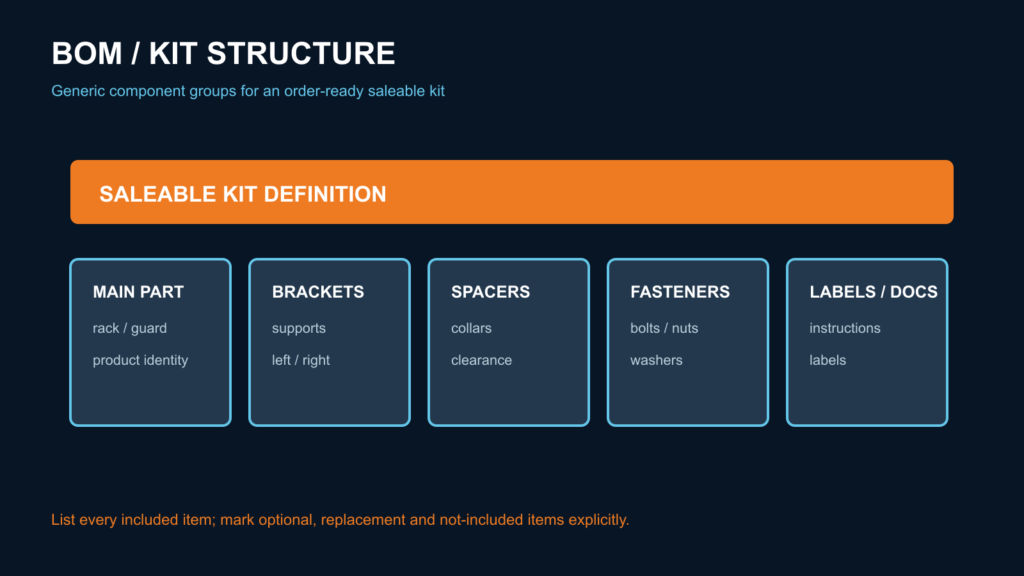
Break the kit into component groups so omissions are easier to spot. A practical motorcycle hardware kit checklist usually considers:
- Main metal part: the rack, crash bar, guard or other finished component.
- Brackets and supports: mounting plates, tabs, stays or left/right support pieces.
- Spacers and collars: items that create the required clearance or mounting position.
- Fasteners: bolts, nuts, screws, studs and other joining hardware.
- Washers and retainers: flat washers, spring washers, clips or other small pieces.
- Tools or installation aids: only when the approved kit scope requires them.
- Instructions and labels: installation notes, product labels or customer-specific identification.
Do not assume that a component is too small to list. A missing spacer can change alignment, and a visually similar fastener can create a receiving or installation problem. If an item is not included, write “not included” in the scope instead of leaving the buyer to infer it.
4. Record quantities, orientation and alternates
Each line needs an expected quantity per saleable kit. Where applicable, also record whether the item is left-hand, right-hand, front, rear, inner or outer. “Bracket — 2 pcs” may be insufficient if the two pieces are mirrored rather than identical.
Use separate lines when:
- Left and right components have different part numbers or shapes.
- One product can use different model variants.
- An alternate fastener is permitted only for a defined configuration.
- An item is optional, replacement-only or installation-only.
Alternates should identify the approved substitute and the condition under which it is used. If the buyer supplies hardware, the BOM should show that responsibility clearly so the supplier is not expected to pack an item that was never provided.
5. Connect the BOM to labels, bags, cartons and packing references
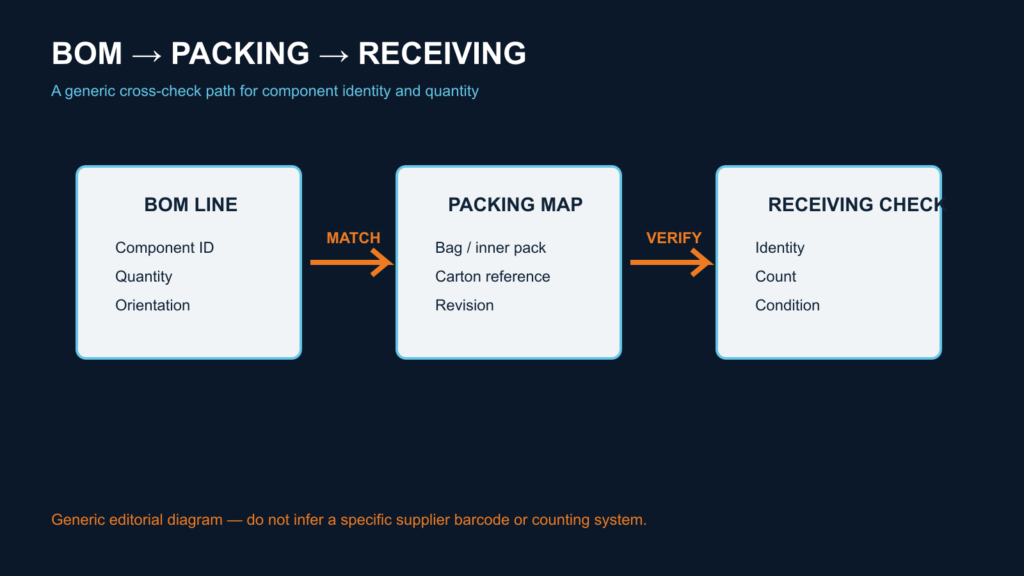
A complete component list becomes more useful when it can be followed into packing. Give each component an identifier that can appear on a hardware bag, inner pack, carton reference or inspection sheet. The identifier does not need to be complex; it needs to be unambiguous and consistent.
For example, a buyer can map a bracket line to “Bag A,” a spacer group to “Bag B,” and the main part to an inner-carton reference. The exact packing method depends on the approved product and buyer requirements. The key is that the person packing the kit and the person receiving it can follow the same map.
For a broader view of carton and shipment linkage, review these traceability requirements. The BOM should support that process without assuming a barcode, automated counting or a particular labeling system unless the supplier has confirmed it.
6. Separate optional, replacement and installation-only items
Use a status column for each line: standard, optional, replacement, installation-only or not included. This prevents an optional accessory from being mistaken for a standard inclusion, and stops a replacement piece from being packed into every kit.
Also state whether a line is packed with every unit, supplied in a separate service pack, or handled only when specifically ordered. If the final customer sees a product listing, the public data should reflect the approved kit scope. The catalog data checklist can help align the product description, images and included-item wording.
7. Verify the BOM against the approved reference
Before releasing an order, compare the BOM line by line with the approved drawing, physical sample, installation reference or buyer specification. Check both presence and identity. A kit can contain the correct number of pieces and still be wrong if a left bracket is replaced by a right bracket or if the fastener does not match the approved requirement.
A useful review records:
- Reference checked.
- Component identity and revision.
- Expected quantity and orientation.
- Optional or alternate status.
- Open questions and responsible reviewer.
- Approval date before packing or shipment.
Where evidence is incomplete, hold the affected line for clarification. Do not fill an unknown material, quantity, fitment or accessory requirement with a guess.
8. Use a receiving checklist for shortages and mismatches
The receiving team should be able to use the same kit list in reverse. For each carton or kit, verify the product identity, component identifiers, quantity, left/right orientation and packaging condition. Record any shortage, extra item or mismatch against the relevant line rather than describing the issue only as “incomplete.”
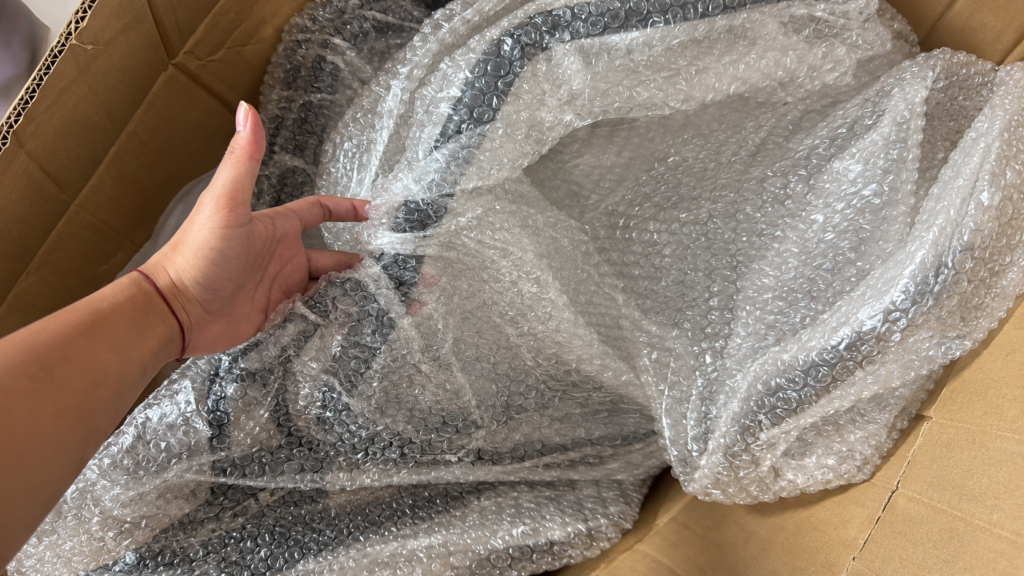
When a discrepancy is found, preserve useful evidence: carton reference, kit or product identifier, photos, the affected line and the approved revision. This helps distinguish a packing shortage from a product-definition error.
9. Control BOM revisions before the next order
A kit list is not finished when it is first written. Changes to brackets, spacers, fasteners, labels or instructions should be reviewed against the product reference and the buyer’s approval process. Keep the old revision identifiable, state what changed, and ensure that the next order, packing reference and receiving checklist point to the same revision.
For approval logic around proposed supplier changes, see the supplier change control guide. A revision should not be silently replaced simply because the new item appears similar.
Frequently Asked Questions
What should a motorcycle parts BOM include?
A BOM should identify the product and revision, application or model reference, every component in the saleable kit, quantities, orientation, optional or replacement status, and the packing or receiving reference used to verify the kit.
How is a BOM different from a purchase order?
A BOM defines the product or kit contents. A purchase order defines the commercial transaction, such as ordered items, quantities, price, delivery terms and other agreed conditions. The two documents should reference the same product revision.
Should fasteners and spacers appear as separate BOM items?
Yes, when they are required for a complete kit or when the buyer needs to verify them separately. Group identical small hardware only when the group has a clear identifier, quantity and packing reference.
How can buyers prevent left/right or model-variant mix-ups?
Use separate identifiers for mirrored parts or variants, record orientation, link each line to the approved drawing or sample, and include the same identifiers in packing and receiving checks.
How should a BOM change be controlled before the next shipment?
Record the proposed change, compare it with the approved product reference, identify the new revision, obtain the required buyer approval, and update the packing and receiving references before the next order is released.
Send a complete kit requirement for review
When requesting a quotation, send the product name, confirmed application, drawing or sample reference, kit scope, component list, quantities, orientation, optional items, packing expectations and labeling requirements. If a requirement is not confirmed, mark it as an open question. A complete request gives the supplier a clearer basis for reviewing the kit and preparing a quotation.
For a model-specific rear rack, crash bar, guard or custom tubular metal component, you can send the requirement through the B2B quote form. Include the information needed to confirm the product definition rather than relying on a product name alone.