
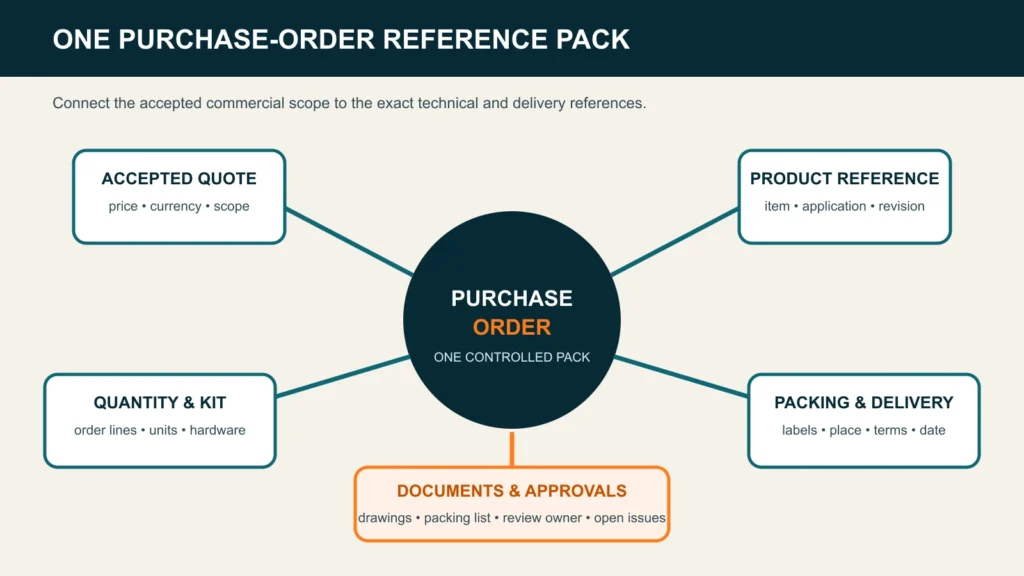
A supplier quotation may look complete, but it is not automatically a production-ready purchase order. This motorcycle parts purchase order checklist helps B2B buyers connect the accepted commercial scope with the exact product version, quantity, hardware, packing, delivery terms and documents required for one order.
The objective is to remove unresolved assumptions before release. This is an operational purchasing guide, not legal, tax, customs or contract advice. The parties should confirm the documents and terms required for the specific product, destination and agreement.
Quick Answer: What Should a Motorcycle-Parts PO Confirm?
A reviewable purchase order should identify the buyer and supplier, the accepted quotation, exact product and approved reference, quantity and unit, price and currency, kit contents, finish, labels, packing, delivery place, shipping terms, requested documents and approval contacts. If any change affects the agreed product or commercial scope, clarify, reapprove or requote it before production release.
Separate the Quote, Purchase Order and Order Confirmation
These documents serve different purposes. A request for quotation asks the supplier to price a defined requirement. A quotation states the supplier’s offered scope, assumptions, price and commercial conditions. A purchase order tells the supplier what the buyer intends to order from the accepted scope. An order confirmation records what the supplier understands and accepts.
Do not use the PO to introduce an unreviewed model, revised finish or new packing requirement while assuming the quoted price and schedule remain unchanged. When the order differs from the quotation, flag the difference explicitly. The motorcycle parts quote checklist covers the earlier RFQ stage, while the factory quote comparison guide helps buyers select the commercial offer. This article begins after that selection.
Identify the Exact Product, Version and Approved Reference
Start every order line with a stable product reference. Depending on the project, that may include the buyer SKU, supplier reference, product description, motorcycle model or application, side or kit status, and the revision of the approved drawing, sample or specification.
A product title such as “rear rack” or “crash bar” is not enough when several versions look similar. Model year, market version, mounting arrangement or hardware may separate one approved item from another. Link the PO to the same reference used during development or sample approval, and state which reference controls if several files are attached.
For repeat orders, do not assume that the previous product reference is still current. Confirm whether the approved drawing, sample, finish, branding and packaging remain unchanged. The motorcycle parts batch consistency guide explains why one approved reference should remain identifiable during repeat production.
State Quantity, Unit, Kit Scope and Order Lines
Quantity only becomes useful when its unit is clear. State whether an order line refers to an individual part, left/right pair, complete kit, carton or other agreed unit. Separate materially different models, finishes, sides or private-label versions into distinct order lines.
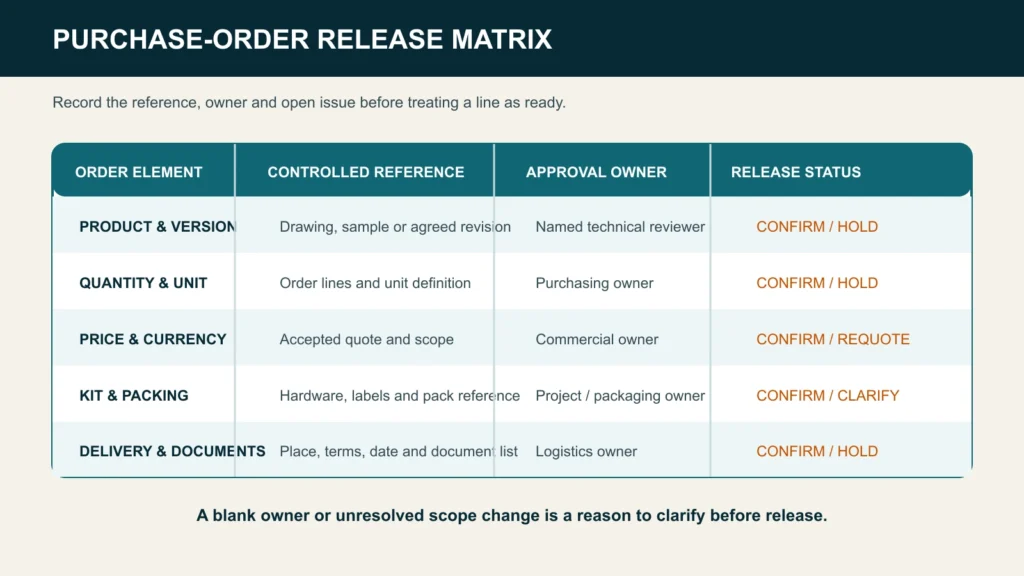
| Order element | What the PO should identify | Question to resolve before release |
|---|---|---|
| Product and version | SKU, description, application and approved reference | Does this line identify one current saleable configuration? |
| Quantity and unit | Number plus piece, pair, set, kit or other agreed unit | Can purchasing and packing interpret the quantity the same way? |
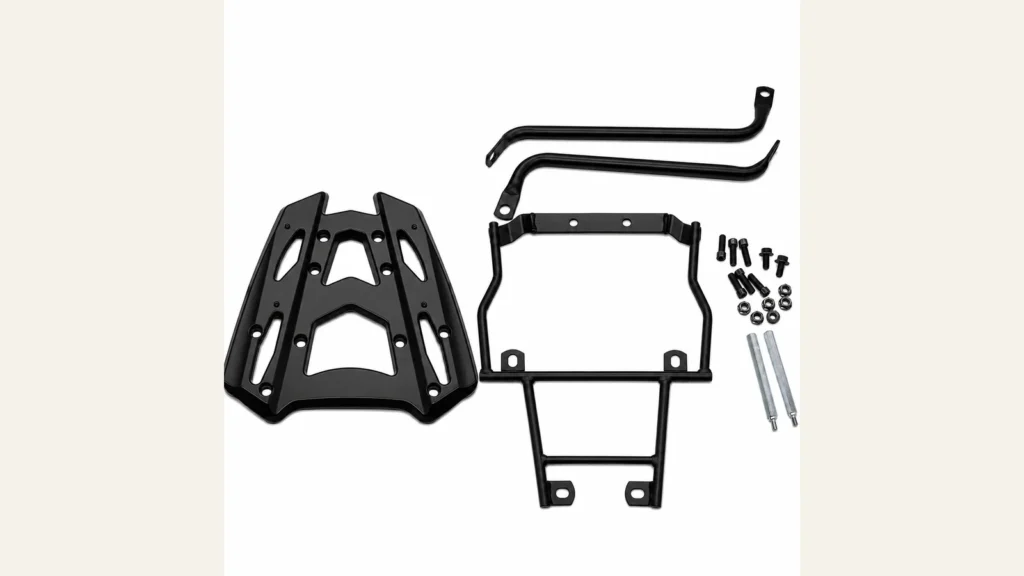
| Kit contents | Main parts, brackets, hardware bags and separately supplied items | Is every included item listed or linked to an approved kit reference? |
| Commercial scope | Unit price, currency and accepted quotation reference | Has any new requirement changed the quoted scope? |
| Delivery and documents | Place, timing reference, shipping terms and required document list | Are responsibilities and required records understood? |
If mixed models or versions share one total quantity without clear order lines, the supplier may not know the required allocation. The buyer may also struggle to match received cartons to the correct SKU.
Lock the Agreed Price, Currency and Scope Assumptions
Reference the accepted quotation and record the agreed unit price, currency and any relevant quantity basis. If tooling, samples, special packaging, labels or third-party services are separate charges, identify whether they are included, excluded or placed on separate lines.
A PO should record the commercial decision, not reopen the entire costing analysis. When a changed quantity, finish, hardware set or packing method affects the original assumptions, request clarification or an updated quotation. The motorcycle parts manufacturing cost factors guide provides background on why scope changes can affect price without assigning a universal cost formula.
Attach Requirements for Finish, Hardware, Labels and Packing
Do not rely on a generic phrase such as “same as last time” when several references may exist. Link each affected order line to the approved finish, hardware list, label artwork and packing instruction. If the buyer accepts a reference sample, identify it clearly enough that both sides can distinguish it from earlier or rejected versions.
Hardware and packing details may include the fastener or bag reference, quantity per kit, inner protection, carton arrangement, carton label and buyer-specific marks. Use the motorcycle parts packaging checklist for detailed packing review. Where private-label artwork or packaging is involved, keep its approval separate through the OEM branding requirements.
Confirm Delivery Place, Shipping Terms and Required Documents
State the requested delivery place or destination, the agreed shipping term and the timing reference used by both parties. A trade term does not replace the technical specification, product reference or document list.
The International Chamber of Commerce publishes the official Incoterms® 2020 rules. Buyers should use the exact named place and agreed rule where applicable, then obtain professional advice for the specific transaction. Do not assume that a three-letter term alone defines product specifications, payment conditions or every customs obligation.
List the documents required for the shipment rather than asking for “standard documents.” Depending on the transaction, these may include a commercial invoice, packing list or other buyer-, carrier- or destination-specific records. The U.S. International Trade Administration’s overview of common export documents is useful background, but requirements still depend on the destination, product and agreement.
Control Changes Before the Order Is Released
Compare the PO with the accepted quotation and approved reference. Highlight any change in product version, application, quantity, finish, hardware, labels, packing, delivery or required documents. Assign a named owner to approve or clarify each open issue.
If the change affects technical feasibility, sample approval, price or timing, hold the affected line until both sides agree on the updated scope. Do not hide a change inside an email attachment or assume that silence means approval. Record the final reference set in the PO or order confirmation so purchasing, production, packing and receiving teams work from the same information.
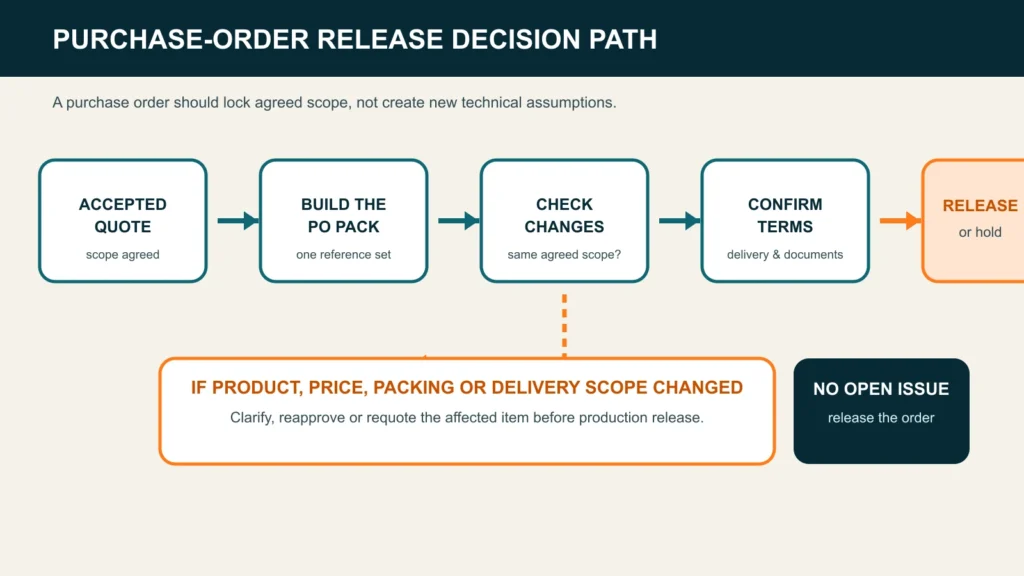
Purchase-Order Release Decision Path
- Select the accepted quotation and identify its scope and assumptions.
- Build one purchase-order reference pack for each saleable configuration.
- Confirm product version, application, quantity, unit and kit contents.
- Link the approved finish, hardware, labels and packing requirements.
- Confirm price, currency, delivery place, shipping terms and document list.
- Compare the PO with the accepted quotation and flag every change.
- Release only the lines with no unresolved technical or commercial issue; clarify, reapprove, requote or hold the others.
Frequently Asked Questions
Is a supplier quotation the same as a motorcycle-parts purchase order?
No. The quotation is the supplier’s offer; the PO states what the buyer intends to order. The buyer should reference the accepted quotation and identify any difference.
What product reference should be attached to a motorcycle-parts PO?
Use the reference that identifies the current approved item, such as the agreed SKU, drawing revision, approved sample or controlled specification applicable to that order.
Should a PO state the model year and market version?
Yes when those details affect the approved application or distinguish one saleable version from another. Do not add an unverified year or market range.
Which hardware, packing and label details belong on a purchase order?
Include or reference the details needed to identify the approved kit, hardware bag, packaging configuration, labels and buyer-specific marks for the affected order line.
What should happen if the approved sample or product version changes?
Identify the proposed change, review its effect on the order scope, and obtain the required technical and commercial confirmation before releasing the affected line.
Can an Incoterms® rule replace the technical product specification?
No. Incoterms® rules address defined delivery-related responsibilities. They do not identify the product version, fitment, quality reference, packaging design or complete contractual scope.
Send a Reviewable Purchase Order
Before production release, assemble the accepted quotation, exact product references, order lines, kit contents, approved finish and packing instructions, delivery details, document requirements and unresolved questions. If you are preparing a motorcycle-parts order, send the reviewable request through the XCMOTOPARTS quote contact page. Clear references make it easier to separate confirmed scope from items that still require clarification.