When a motorcycle guard, rack, or tubular bracket moves from a sample into batch production, buyers often ask whether the supplier has a fixture. That is only the first question.
The more important questions are: What does the fixture control? Which approved drawing or sample does it follow? How was the first article checked? And what happens if the part, drawing, or application changes?
A production fixture can help position a tubular part consistently during forming, assembly, or welding. However, the fixture itself is not proof of vehicle fitment, safety performance, material grade, or certification. Buyers should review the fixture together with the approved drawing, reference sample, first article, and revision record.
Quick Answer: What Should Buyers Validate?
Before batch production, ask the supplier to connect four items:
- the approved drawing or reference sample;
- the production jig or fixture;
- the first article produced with that fixture;
- the current revision and approval record.
The purpose is not simply to confirm that a fixture exists. The purpose is to check whether the fixture supports the correct part geometry, mounting points, orientation, and production version.
What a Production Fixture Does
A fixture is a positioning and holding tool used during a repeatable production step. Depending on the part, it may help hold a tubular section, locate mounting brackets, maintain the relationship between left and right sides, or keep components in position during tack welding and final welding.
For a motorcycle guard, the fixture may support the overall profile while the mounting plates and connecting tubes are positioned. For a rear rack or other tubular part, it may help the production team check the relationship between the main frame, support tubes, and mounting points.
The exact function depends on the product and process. A fixture used for welding should not automatically be described as a forming mold. If the tool changes the shape of the material, terms such as bending die or bending jig may be more accurate. If the tool mainly holds parts in the correct position, welding fixture or assembly jig is clearer.
Start with the Approved Reference
Fixture validation should begin with the reference that the fixture is supposed to follow. This may be a technical drawing, a customer-approved sample, marked-up photographs, or a combination of these documents.
Before reviewing the fixture, buyers should confirm:
- the product name and intended application;
- the relevant model, year, or market version when applicable;
- the latest drawing or sample revision;
- left-hand and right-hand part identification;
- the main mounting points and interface areas;
- any reference photographs or marked-up areas supplied by the buyer.
A drawing package should explain which dimensions and interfaces are important for quotation and development. You can also review the motorcycle parts drawing package checklist before sending a new project to a supplier.
Check the Fixture’s Datums and Mounting Points
The first technical review should focus on how the fixture locates the part. A buyer does not necessarily need to specify the fixture design, but should understand which points are being used as references.
Useful questions include:
- Which surfaces or holes locate the part?
- Which points control the overall orientation?
- Are the mounting brackets held in the correct position?
- Does the fixture distinguish left and right parts?
- Can the part be loaded in only one correct orientation?
- Are the contact points visible enough for inspection?
- Could wear, damage, or adjustment change the position over time?
For tubular motorcycle parts, the overall shape may look correct while one mounting plate is slightly rotated or positioned incorrectly. That is why the fixture should be reviewed against the interfaces that matter during installation, not only against the outside appearance.
Compare the First Article with the Fixture
The first article is the first production example made with the current process and fixture. It should be reviewed before the supplier treats the fixture as ready for repeated production.
The comparison may include:
- overall profile and bend direction;
- mounting plate location;
- hole orientation and access;
- relationship between connected tubes;
- left-hand and right-hand symmetry where relevant;
- welded attachment position;
- clearance around the intended mounting area.
The first article should be linked to the drawing or approved sample that was used for the review. If the project includes several product versions, the buyer should confirm which version the first article represents.
This is different from a general pre-shipment inspection. A pre-shipment inspection checks finished goods before dispatch. First-article approval checks whether the production setup is following the approved reference before the batch moves forward. See the motorcycle parts first article inspection guide for the wider approval process.
A PCX160 Crash Bar Production Example
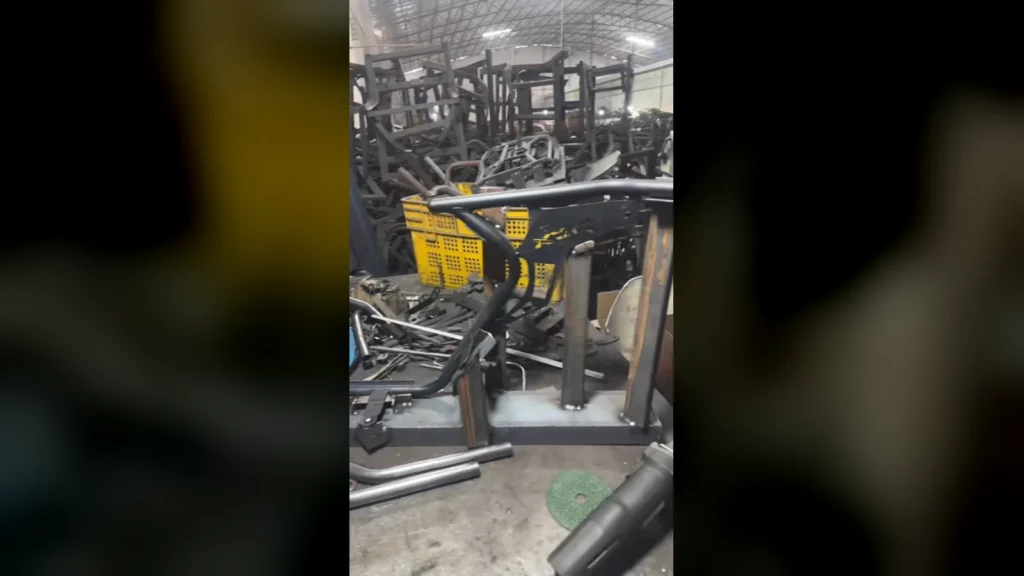
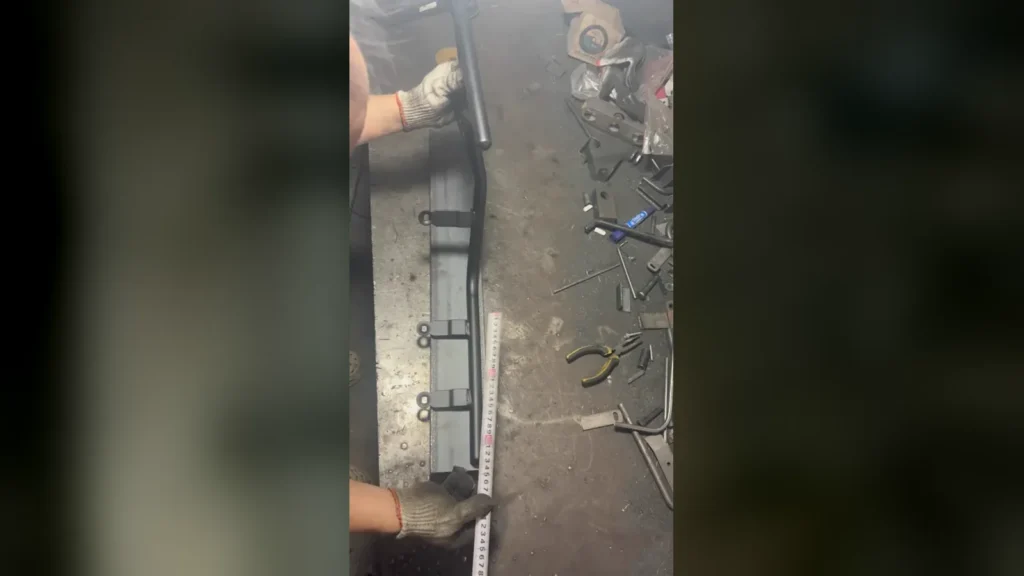
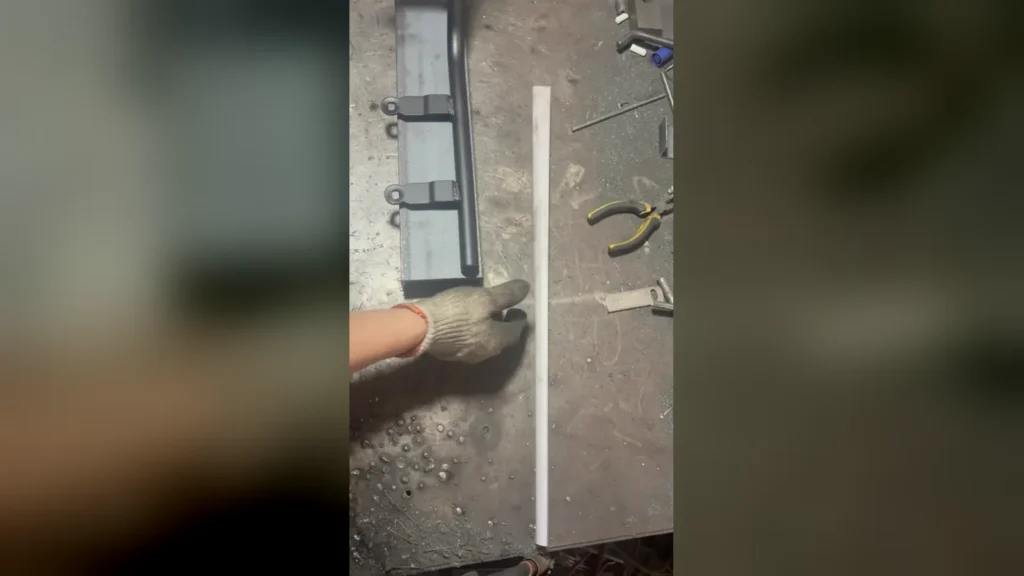
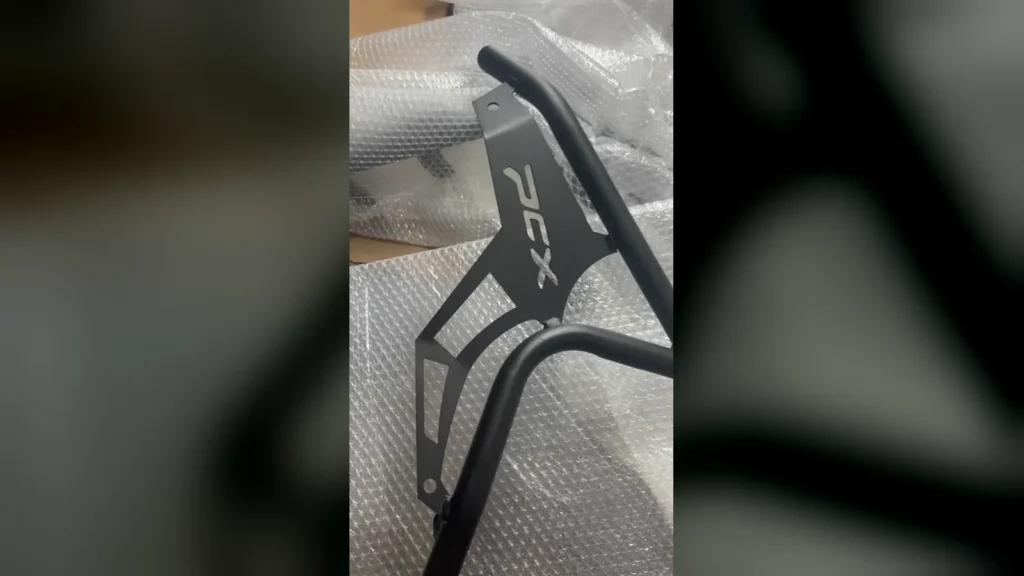
The production example used for this article is a PCX160 crash bar. The publicly approved video shows the production team working with a purpose-built fixture and checking the relationship between the tubular guard and its mounting structure.
The supporting images show three useful stages: the fixture in the workshop, a dimensional or reference comparison during checking, and the finished black crash bar after production. Together, these stages help explain why buyers should review the production reference and the finished part as one connected process.
The example does not establish a specific material grade, tube size, load rating, road-safety result, or certification. Those details must be confirmed separately for each project. The PCX160 name identifies the application example only and does not imply an official relationship with the vehicle manufacturer.
Connect Fixture Approval with Revision Control
A fixture is connected to a specific version of a product. If the drawing, mounting plate, bend position, or reference sample changes, the supplier should confirm whether the fixture still matches the new version.
Before approving a change, buyers should ask:
- What exactly changed?
- Does the current fixture still support the revised part?
- Does a new first article need to be produced?
- Which old parts or fixtures should be separated?
- How is the effective production version recorded?
A clear change-control process helps prevent an old fixture or old drawing from being used after approval has moved to a new version. Review the motorcycle parts supplier change-control guide for a related buyer checklist.
What Evidence Should Buyers Request?
For a custom motorcycle parts project, buyers can request a small evidence package rather than relying on a single workshop photograph.
A useful package may include:
- fixture photographs from more than one angle;
- a photo showing how the part is loaded into the fixture;
- first-article photographs next to the approved reference;
- marked-up areas showing important mounting points;
- the drawing or sample revision used for approval;
- a record of open changes or pending adjustments;
- confirmation of whether the fixture is approved for the current batch.
Photos are helpful, but they should support a defined review. A close-up image without product identity, revision information, or reference context is difficult for a buyer to use.
What Fixture Validation Does Not Prove
Fixture validation is one part of production control. It does not prove every aspect of the finished product.
A fixture review does not automatically prove:
- final vehicle fitment for every model or model year;
- crash or impact performance;
- material grade or mechanical properties;
- corrosion resistance or coating performance;
- compliance with destination-market regulations;
- road-use approval or certification.
These subjects require separate specifications, tests, approvals, or documentation when they apply to the project. A supplier quality audit can also review whether the supplier has a controlled process for drawings, fixtures, inspection, and nonconformity handling. See the motorcycle parts supplier quality audit checklist for that broader review.
Buyer Checklist Before Batch Production
- Confirm the latest drawing or reference sample.
- Identify the current product and application version.
- Ask what process the fixture supports.
- Review the fixture’s locating and mounting references.
- Compare the first article with the approved reference.
- Record left-hand, right-hand, and variant information.
- Confirm whether any open changes affect the fixture.
- Keep fixture evidence with the drawing and approval record.
- Do not treat fixture existence as proof of safety or certification.
Frequently Asked Questions
What is a motorcycle parts production fixture?
It is a tool used to hold or position a part during a repeatable production step, such as assembly, tack welding, or final welding.
Is a fixture the same as a mold?
Not always. A fixture normally holds or locates a part. A mold or die usually forms or shapes material. The correct term depends on the actual function of the tool.
Does fixture validation prove that a crash bar will fit the motorcycle?
No. It shows that the production setup follows a defined reference. Final vehicle fitment still needs to be checked against the correct motorcycle version and mounting interfaces.
What should buyers compare with the first article?
Compare the first article with the approved drawing, sample, photographs, mounting references, orientation, and current revision record.
When should a fixture be checked again?
It should be reviewed when the drawing, sample, mounting structure, production method, or product version changes. It may also need checking after repair, adjustment, or visible wear.
Final Takeaway
A fixture is valuable because it gives the production team a repeatable reference. For buyers, the important point is not simply whether a supplier has a jig or fixture. The important point is whether the fixture, first article, drawing, and revision record all describe the same approved product.
For a new motorcycle parts project, prepare the drawing or sample package first, identify the important mounting interfaces, and ask the supplier to show how the fixture and first article are connected to that reference. If the project involves a new model, a changed bracket, or a revised application, confirm the updated version before batch production begins.
If you are preparing a custom motorcycle guard, rack, or tubular bracket project, you can send the available drawings, photographs, marked-up references, and application information through the XCMOTOPARTS contact page for an initial technical discussion.